
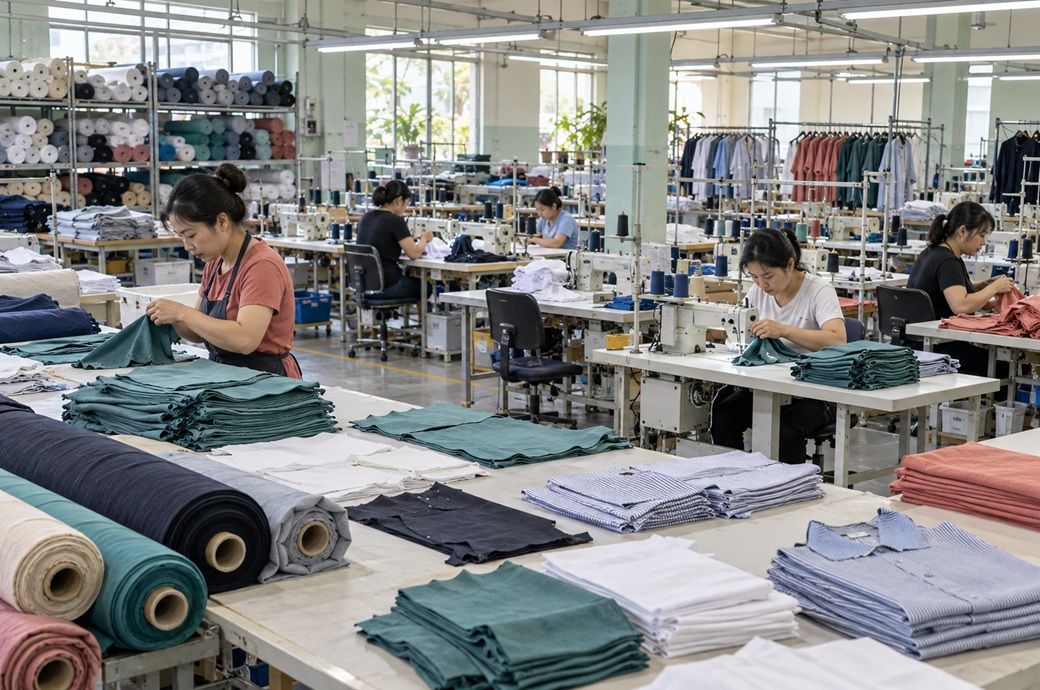
Textile and garment exports reached an estimated $33.02 billion in the first eight months of 2026, up 6.7 per cent year on year, reports claimed, citing the Vietnam National Textile and Garment Group (Vinatex). Within that total, textiles and yarn reportedly rose 37.4 per cent, while apparel exports reportedly increased 1.6 per cent.
Vietnam’s textile and garment exports reached an estimated $33.02 billion in the first eight months of 2026, up 6.7 per cent year on year.
Textiles and yarn rose 37.4 per cent, while apparel exports increased 1.6 per cent, reports citing Vinatex said.
Manufacturers face smaller orders, shorter lead times, input-cost volatility, import dependence and rules-of-origin pressure.
The headline growth, however, masks a more difficult operating environment for manufacturers. Reports identified fluctuations in cotton and fibre prices, exchange-rate movements, weaker demand in the US and EU, higher logistics and raw-material costs, stricter rules-of-origin and trade-remedy requirements, and intensifying competition amongst key risks for the industry.
Reports also added that garment operations were also dealing with smaller orders, shorter lead times and intense price competition.
This means export growth cannot be assessed simply through capacity utilisation or headline turnover. For manufacturers, the quality of orders and the margins they generate are increasingly important, particularly when shorter lead times and fragmented orders can increase production, inventory and working-capital pressures.
The emphasis is therefore on tighter management of cash flow, inventories and receivables, alongside productivity improvements and more systematic use of data in decision-making. The focus is increasingly shifting from simply maintaining volumes to improving operational efficiency and protecting profitability.
Another structural issue is the industry’s dependence on imported textile inputs. Vietnam reportedly imported more than $19.37 billion worth of textile and garment materials in the first eight months of 2026, an increase of an estimated 4 per cent from the same period a year earlier, according to preliminary trade statistics.
China remains a dominant supplier of these inputs, leaving Vietnamese manufacturers exposed to movements in input prices, supply-chain disruptions and changes in trade policy.
Import dependence can also affect manufacturers’ ability to meet preferential rules of origin under free-trade agreements. Under the Comprehensive and Progressive Agreement for Trans-Pacific Partnership (CPTPP), textile and apparel products are subject to product-specific rules of origin. Many apparel products follow a yarn-forward structure, under which specified stages of textile production must take place within CPTPP parties, although the agreement provides for exceptions, including limited allowances for certain non-originating materials and a short-supply list.
The competitive landscape is also becoming more complex. China reportedly continues to benefit from a highly integrated textile supply chain, while Bangladesh and other Asian producers remain important competitors in global apparel markets.
Reports citing Vinatex underlined that China’s textile and garment exports increased 2.4 per cent in the first seven months of 2026, while Bangladesh’s rose 3 per cent in the first eight months, and Indonesia reportedly recorded 3 per cent growth in the first seven months.
The figures show that performance varies across markets and product categories rather than moving uniformly across competing producers.
For Vietnam, the competitive challenge therefore extends beyond production cost. Supply-chain depth, the ability to respond quickly to smaller and shorter orders, access to competitively priced inputs, compliance with rules of origin and trade regulations, and the ability to move into higher-value products will all influence manufacturers’ competitiveness.
Environmental performance and supply-chain traceability are also becoming more significant considerations for exporters, particularly where customers and destination markets impose sustainability, due diligence or traceability requirements. Investments in energy efficiency, cleaner production and digital traceability can consequently have both compliance and operational benefits.
The outlook for Vietnam’s textile industry is therefore not simply a question of whether export volumes will continue to rise. The more important question for manufacturers is whether they can convert that growth into sustainable margins by improving productivity, managing working capital, strengthening supply-chain resilience and capturing more value from each order.
Fibre2Fashion News Desk (DR)
