
4 min readNew DelhiAug 4, 2026 08:00 PM IST
Climate activist and educationist Sonam Wangchuk once offered a rare glimpse inside his eco-conscious home in Ladakh, showcasing how centuries-old Himalayan architectural practices can be seamlessly integrated with modern comfort and sustainable living.
The home tour, shared three years ago by YouTuber Amita Chhorgia Negi, popularly known as Tribal Girl, highlights a traditional Ladakhi house built with indigenous materials and climate-responsive techniques, while incorporating contemporary interiors and amenities.

DISCLAIMER: This article is based on information from the public domain and/or the experts we spoke to.
Rammed-earth walls, wooden ceiling beams
During the tour, Wangchuk explains how the house is built with rammed-earth walls, a construction method used for centuries across Ladakh, Kinnaur, and Tibet. The thick mud walls naturally remain cool during summer and help regulate indoor temperatures throughout the year.
Wooden ceiling beams and large windows further enhance the home’s connection with its natural surroundings by allowing abundant daylight indoors.
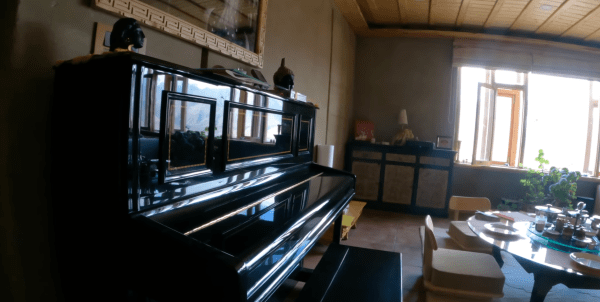 Inside Sonam Wangchuk’s home in Ladakh (Photo: Tribal Girl/YouTube)
Instead of relying on conventional heating systems or a traditional bukhari, the house uses passive solar heating. A black wall made from recycled water bottles is positioned behind large wood-framed windows. The bottles absorb the winter sun’s heat during the day and gradually release it at night, helping maintain indoor temperatures between 18 and 20 degrees Celsius without burning fuel.
While the home’s exterior stays rooted in traditional Himalayan architecture, its interiors are designed for modern living. The residence features comfortable sofas, vintage furniture, a modular kitchen, bedrooms with attached bathrooms, and traditional low seating arrangements that preserve Ladakhi dining customs.
Story continues below this ad
Ecological sanitation system, composting toilet
Wangchuk also demonstrates the home’s ecological sanitation system, which replaces conventional flush toilets with urine-separated composting toilets.
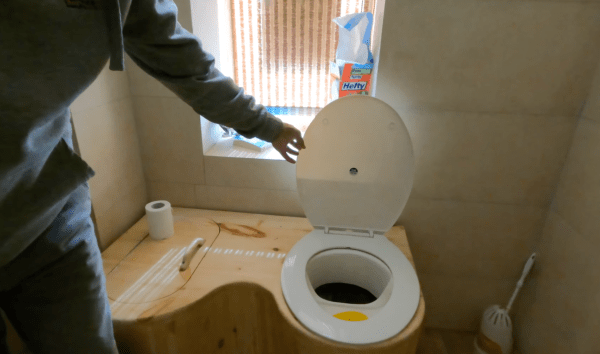 Ecological toilet in Sonam Wangchuk’s Ladakh home (Photo: Tribal Girl/YouTube)
Instead of using water, sawdust or mud is added after use to prevent odours. The collected waste is then stored until it decomposes into organic manure, reducing water consumption while producing fertiliser for agriculture.
The kitchen has also been designed to reflect Ladakh’s communal lifestyle, allowing family members to cook, eat, and spend time together in a shared space. Outside, the property includes an apple orchard and a greenhouse.
Sustainability in modern homes
Shubhra Dahiya, Partner, team3, shared her insights on a common assumption that sustainability in modern homes required a full renovation. She stressed that sustainability can be achieved by looking at what already exists in a house and making more thoughtful choices around it.
Story continues below this ad
“A well-made piece of furniture carries a certain value and character that can often be preserved. A chair can be reupholstered with a new fabric to give it a fresh life, old cabinetry can be refinished or detailed differently instead of being replaced, and existing materials can be reinterpreted in new ways within the space. Even simple changes like improving the use of natural light, introducing natural fabrics, or bringing in more greenery can influence how a home feels and functions,” Dahiya explained.
For homeowners practising sustainable living, Dahiya recommended three things that every house should have this year. “I would start with changing the way we think about consumption within our homes,” she said, adding that homeowners should buy less and choose better.
“Second, give existing things a longer life. Before replacing furniture or finishes, consider whether they can be repaired, restored, or adapted. Often, the elements that carry a sense of history are what make a home feel truly personal. Third, design around the natural environment. Make the most of daylight, encourage ventilation, bring in greenery, and choose materials that create a healthier connection with nature,” she said.
DISCLAIMER: This article is based on information from the public domain and/or the experts we spoke to.
