
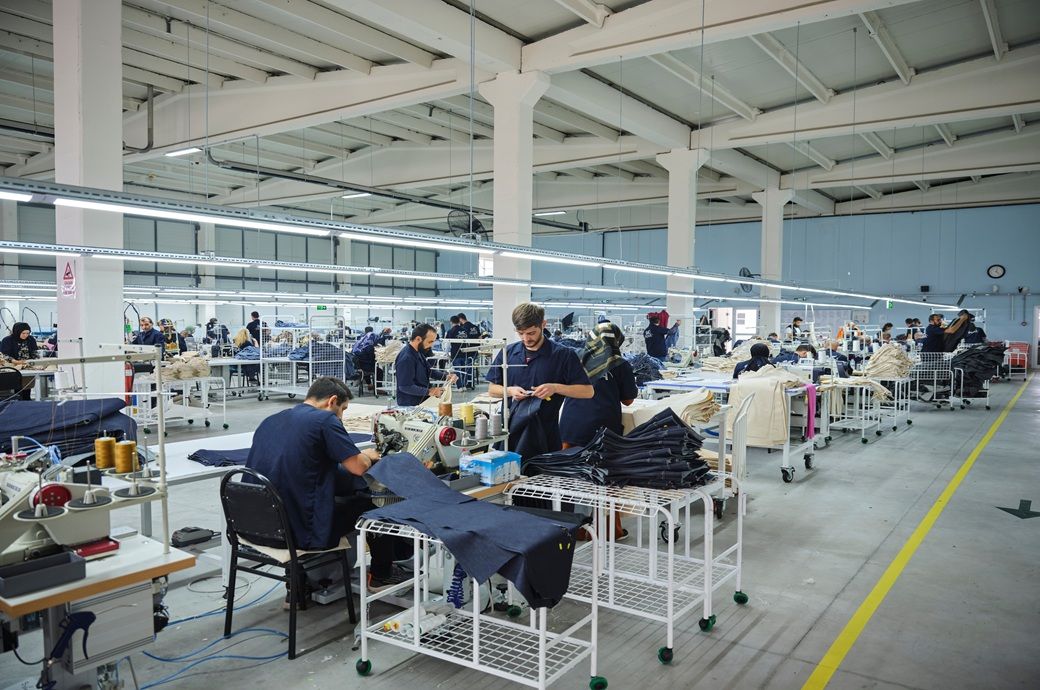
Output returned to growth, in part reflecting a renewed expansion in new export orders, ending a 20-month sequence of moderation.
Turkiye’s manufacturing sector displayed signs of improvement midway through Q2 2026, S&P Global said.
Output returned to growth, in part reflecting a renewed expansion in new export orders.
May data pointed to a renewed increase in manufacturing production, a marked turnaround from the sharp slowdown in output seen during April.
Purchasing activity expanded for the first time in just over two years.
Purchasing activity also rose, but anecdotal evidence suggested that this was in part due to safety stock building amid price and supply disruption caused by the war in the Middle East.
Input costs continued to rise sharply and suppliers’ delivery times lengthened.
The headline Istanbul Chamber of Industry Turkiye manufacturing purchasing managers’ index (PMI) moved much closer to the 50 no-change mark during May, posting 49.8 following a reading of 45.7 in April.
The PMI was at its highest since March 2024 and signalled a near-stabilisation of business conditions.
May data pointed to a renewed increase in manufacturing production, a marked turnaround from the sharp slowdown in output seen during April.
The rise in exports helped limit the extent of the slowdown in total new business, which nonetheless eased slightly during the month.
Where new orders moderated, panellists linked this to uncertainty, higher prices and the war in the Middle East.
Employment also continued to be scaled back, albeit to the smallest extent in 2026 so far.
Purchasing activity expanded for the first time in just over two years as some firms looked to stockpile inputs amid rising prices and supply-chain disruption caused by the war in the Middle East, a release from S&P Global said.
Despite this, stocks of purchases continued to soften, albeit at a much slower pace than in April.
Input costs increased sharply, often linked by panellists to the war in the Middle East. Higher prices for fuel, oil, metals and transportation were mentioned in particular.
The rate of inflation eased, however, and this was also the case with regards to output prices. The conflict also caused longer delivery times, with vendor performance deteriorating for the seventh consecutive month in May.
Fibre2Fashion News Desk (DS)
