
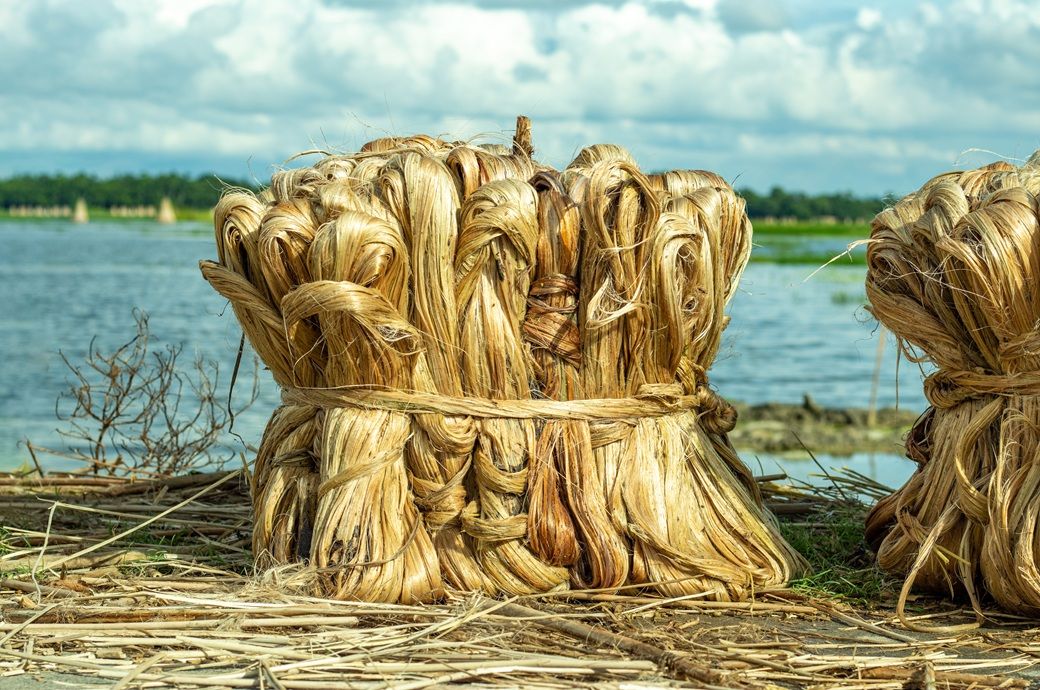
The target can be achieved through modernisation, planned reforms, research, diversified products and stronger private sector participation, Muktadir said while inaugurating the five-day ‘Diversified Jute Products Fair-2026’ at Dhaka’s Jute Diversification Promotion Centre (JDPC).
Bangladesh aims at transforming its jute sector into a $5-$7-billion export-oriented industry, Commerce, Industries and Textiles and Jute Minister Khandakar Abdul Muktadir has said.
This can be achieved through modernisation, reforms, research, diversified products and stronger private sector participation.
Another aim is to achieve self-sufficiency in jute seed production to cut import dependence.
Bangladesh now earns around $1 billion annually from jute and jute goods exports, but the sector could grow multi-fold with meticulous planning, modern technology, intensive research, quality seed production and diversification of products, he said.
Despite jute exports hitting around $50-55 billion a year, he said, the sector’s export contribution has remained almost stagnant. To reverse the trend, the government has adopted a time-bound action plan focusing on productivity enhancement and market diversification.
Under the plan, the government aims at achieving self-sufficiency in quality jute seed production to reduce dependence on imports, as the country now imports nearly 6,000 tonnes of jute seeds annually, he noted.
The minister also announced plans for joint ventures with leading Chinese universities to improve jute productivity, develop advanced seed varieties and create internationally competitive product designs, according to domestic media outlets.
He said state-owned jute mills are gradually being shifted toward private management systems to ensure modernisation, higher efficiency, increased production and commercially sustainable operations.
A comprehensive road map is being prepared in coordination with the JDPC and private sector stakeholders to restore the sector’s competitiveness, he added.
Fibre2Fashion News Desk (DS)
