
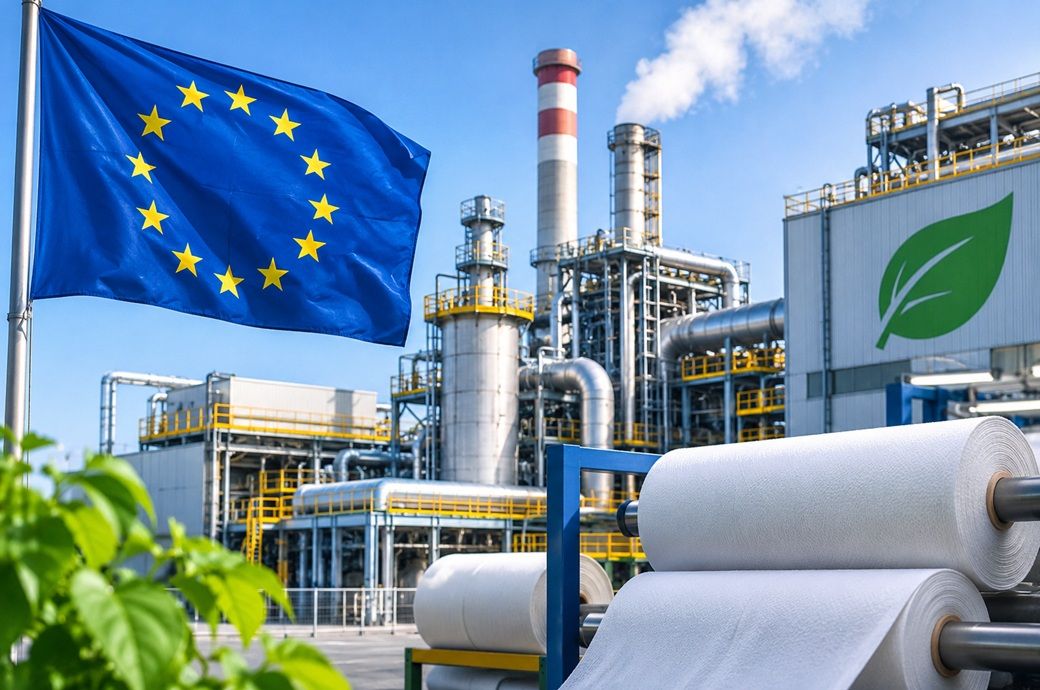
The European Union (EU) has agreed to increase free carbon allowances for energy-intensive industries from 2026 to 2030, providing around 121 million allowances to help protect businesses from carbon leakage and maintain industrial competitiveness while supporting decarbonisation.
The provisional agreement was reached by the Council of the EU and the European Parliament. It covers sectors operating under the heat and fuel benchmarks of the EU Emissions Trading System (ETS), which determine free carbon allocations based on industrial energy consumption.
The EU has agreed to provide around 121 million free carbon allowances to energy-intensive industries from 2026 to 2030, aiming to protect competitiveness and prevent carbon leakage.
The deal includes targeted support for vulnerable sectors, with unused allowances channelled into modernisation and innovation funds.
It awaits formal approval by the Council and European Parliament.
The agreement builds on the European Commission’s proposal to make around 88 million allowances available under existing ETS rules, the commission said in a press release.
The co-legislators added another 28 million allowances that had not previously been allocated because some installations failed to meet ETS conditions, including requirements for energy efficiency audits or climate neutrality plans.
A further five million allowances will be set aside between 2026 and 2030 to provide targeted support to energy-intensive sectors particularly exposed to carbon leakage, which occurs when companies relocate production to countries with less stringent climate rules.
Any allowances not used under this measure will be directed towards investments through the Modernisation Fund and innovation support for ETS sectors through the Innovation Fund.
The revision aims to ease pressure on industries facing reduced free allocations following the June 2026 update of the ETS heat and fuel benchmarks for the 2026–2030 period. The European Commission presented the proposal in July 2026 in response to concerns raised by industry and EU member states.
Heat and fuel benchmarks, also known as fallback benchmarks, account for around 25 per cent of total free carbon allocations under the ETS.
The provisional agreement must now be endorsed by the Council and Parliament before formal adoption. Following its adoption, the European Commission will establish implementing rules for calculating the heat and fuel benchmarks.
The revision forms part of the EU’s ‘One Europe, One Market Roadmap’, which has a completion target of the first quarter of 2027.
Fibre2Fashion News Desk (CG)