
Google’s effort to keep malware off Blogger briefly ended up locking out legitimate publishers instead.
Beginning Tuesday, August 4, hundreds of Blogger sites were flagged under the platform’s Malware and Similar Malicious Content policy. The incident resulted in blogs being locked, hidden from public view, or deleted despite showing no evidence of malware infection.
For online platforms, the incident is a reminder that their ability to reach their audience ultimately depends on systems they neither control nor fully understand. When those systems make mistakes, even temporarily, the consequences can be catastrophic.
False malware alerts lock Blogger sites
Several Blogger site owners reported enforcement actions that left some publishers unable to access their sites. Others reported that their sites had disappeared from public view or been deleted.
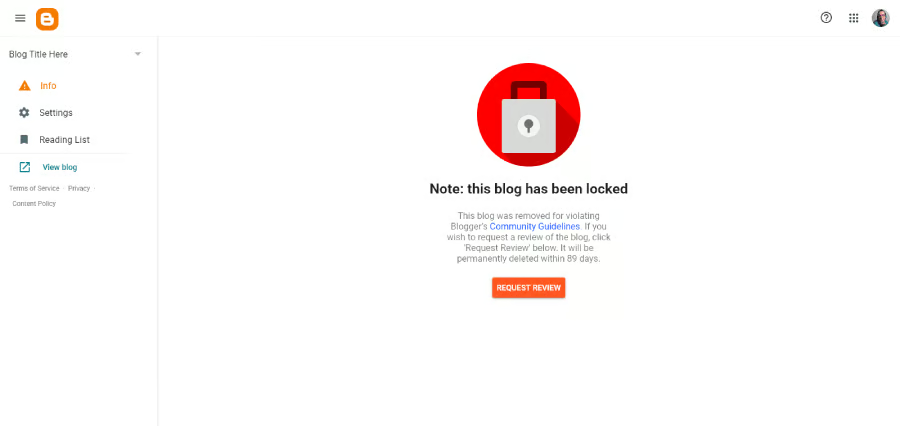
According to BleepingComputer, Google is aware of the incident, but has not released an official figure for the number of affected blogs. However, the outlet says the incident affected hundreds of sites running Google Blogger.
As of the time of writing, Google’s own Blogger support forum has attracted far more than 500 “I have the same question” responses, suggesting the disruption extended well beyond a handful of isolated cases.
Restoration in progress
A Google Product Expert said Google’s team is working to restore blogs that were incorrectly flagged. The expert reiterated that the alerts stemmed from false positives rather than actual malware infections, while some affected users later reported that access to their blogs had already been restored.
The Product Expert also suggested the disruption was unusual in scale. While false positives occasionally occur on Blogger, the expert noted they had not previously seen them affect so many blogs at once, reflecting the widespread nature of the incident discussed across the support forum.
For affected publishers, the Product Expert recommended using Blogger’s Request Review option. Blogs that have been flagged will not be able to access blog management features until they are restored.
Users whose blogs remain deleted can also monitor the official Blogger Help Community for updates as the rollout continues.
Must-read security coverage
Why this matters for online platforms
Google has not disclosed what triggered the false positive detections.
However, the incident echoes a growing number of cases in which buggy security and safety systems have mistakenly flagged legitimate content or software. Although the underlying causes might differ, they illustrate how a single incorrect detection can quickly become a user-facing incident rather than remaining an internal security event.
As automated enforcement becomes more deeply integrated into products and services, companies are increasingly judged by how quickly they identify false positives, communicate with affected users, and restore normal service when mistakes occur.
For publishers and businesses, the takeaway isn’t simply that false positives exist. It’s that operational continuity can no longer be taken for granted.
Incidents like this reinforce the value of maintaining alternative publishing or communication channels and preparing for unexpected platform disruptions, regardless of whether they stem from cyberattacks, technical failures, or erroneous enforcement decisions.
Also read: CrowdStrike warns that AI adoption, cloud attacks, and malicious software packages are creating underdefended attack surfaces that security teams must monitor.
