
A recent claim circulating online has left many people wondering whether something as ordinary as a pillow could be harmful to their health.
During an episode of the podcast ‘Figuring Out with Raj Shamani’, cancer specialist Dr Tarang Krishna suggested that pillows may collect particles from the air and potentially become harmful if used for long periods.
“Your pillow is a breeding house for cancer. Jitne bhi particles hain jo hawa mein hain, wo saare takiye absorb karte hain (All the particles present in the air are absorbed by the pillow). People take their pillows as life partners; ek pillow leliya ab mai marte dum tak isi ke sath rahunga (I bought a pillow, and now I will stay with it until my last breath). That’s dangerous. That’s the air you are inhaling… it is the root of all infections. That’s why people develop asthma and allergies. Change your pillows once in a year at least,” he said.
The remark quickly spread across social media, raising concerns about whether old pillows could actually increase the risk of cancer.
To understand the medical reality behind the viral claim, we spoke to Dr Anil Thakwani, Senior Consultant and HOD, Radiation Oncology, ShardaCare-Healthcity.
DISCLAIMER: This article is based on information from the public domain and/or the experts we spoke to. Always consult your health practitioner before starting any routine.
Is there any evidence linking pillows and cancer?
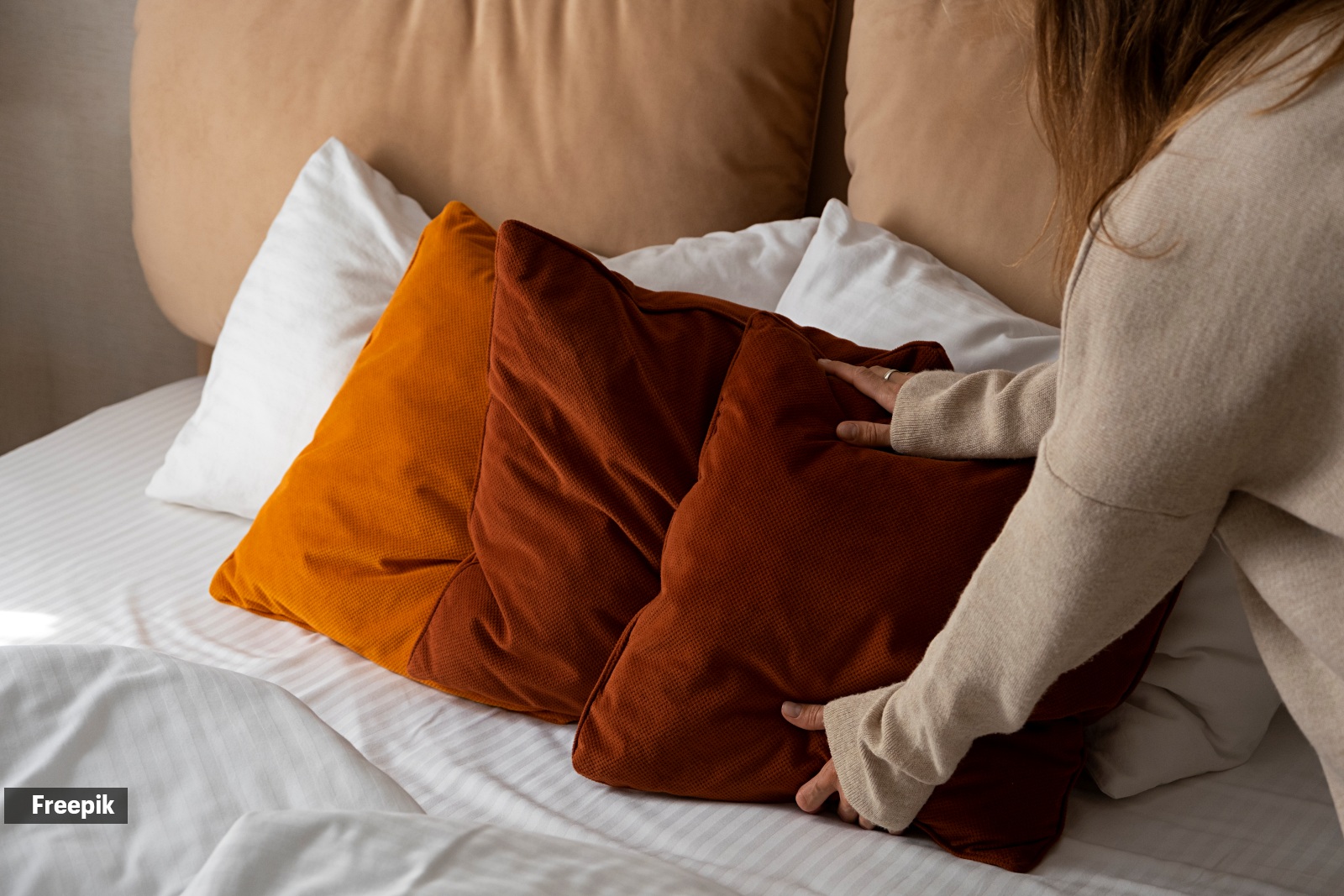 Old pillows may act as a breeding ground to the microscopic mites and fungal proliferation (Images: Freepik)
According to Dr Thakwani, there is no scientific evidence showing that pillows increase cancer risk. “No pillows have been supported in scientific literature as being a strong risk factor for cancer.”
Story continues below this ad
However, he explained that pillows can accumulate dust, skin cells and airborne particles over time. That being said, these are often associated with “allergies or breathing problems” and not cancer.
He also noted that viral claims online often exaggerate risks without scientific backing.
“Most of the viral statements on social media blow out of proportion the dangers with no medical evidence.”
What happens when you use the same pillow for years?
Over time, pillows can collect sweat, body oils, dust mites and sometimes fungi, particularly in humid environments. While this may sound concerning, the oncologist says the health risks are usually limited to allergies or irritation.
Story continues below this ad
“The same pillow when used over a long time may have accumulated dust mites, sweat, oil and even fungus particularly in a humid setting. But these contaminants have not been known to cause cancer directly,” he said.
Instead, sensitive people may experience respiratory or skin-related issues.
“They have a tendency to affect only allergies, asthma exacerbation, or cutaneous irritation in sensitive individuals.”
Here are a few risks of using the same pillow for years, as per Dr Thakwani:
- Dust mites: The old pillows may act as a breeding ground for microscopic mites.
- Potential fungi proliferation: Wet or poorly aerated bedding can promote fungal proliferation.
- Allergies: The majority of health effects are associated not with cancer but with respiratory irritation or with skin irritation.
Why pillow hygiene still matters
Even though pillows are not linked to cancer, keeping them clean remains important for overall sleep hygiene and comfort. “Washing and changing of pillows regularly is essential to keep the standards of hygiene and sleep high,” Dr Thakwani said.
Story continues below this ad
He recommends replacing pillows periodically and maintaining clean bedding to improve sleep. “Changing pillows once every two years and washing pillow covers regularly are a few measures that can make the sleeping conditions healthier,” he said.
Regular household cleaning can also improve indoor air quality. “Although the majority of dust in the household does not have direct correlation to cancer, it is still preferable to make the household environment less exposed to pollutants like smoke particles or even certain chemicals in the long run,” the doctor said.
Maintaining clean bedding, ventilating rooms, and vacuuming regularly can help reduce allergens and improve overall respiratory comfort, even though these steps are not specifically linked to cancer prevention.
DISCLAIMER: This article is based on information from the public domain and/or the experts we spoke to. Always consult your health practitioner before starting any routine.
