
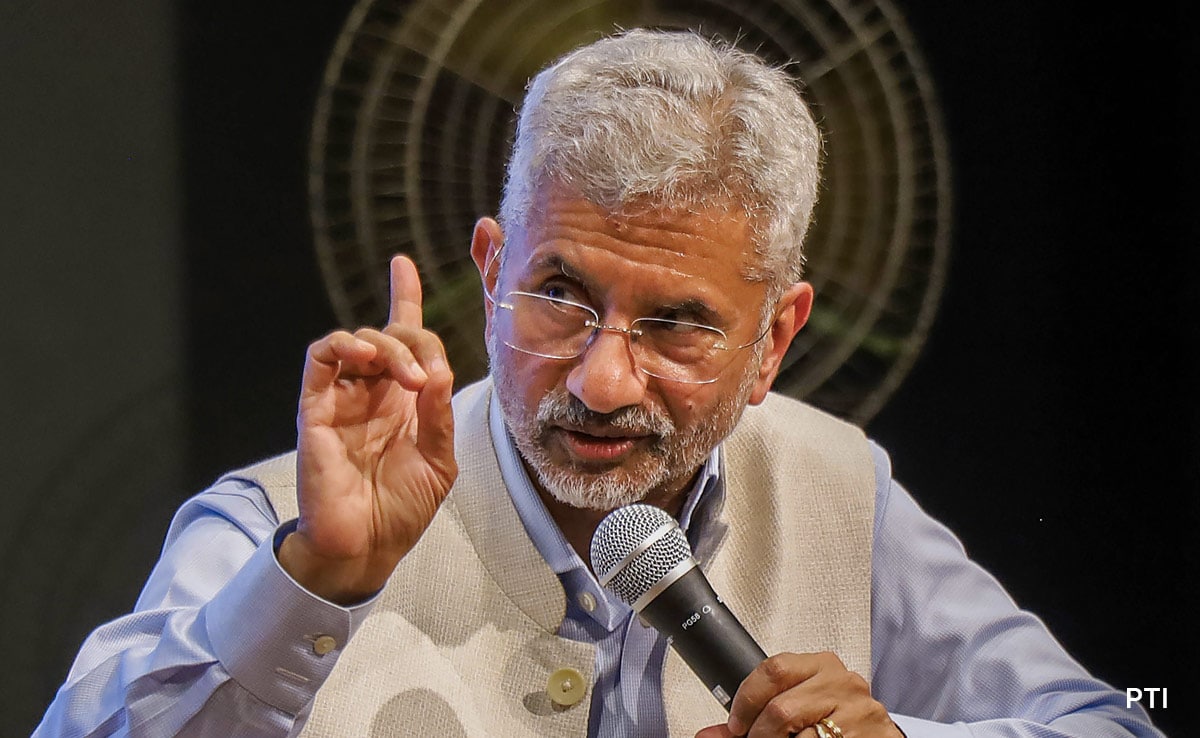
India has mocked Pakistan’s attempt at mediation in the Middle East war, using the strongest of languages to refer to Islamabad as it seeks a role in global diplomacy. At an all-party meeting in Delhi today, Foreign Minister S Jaishankar derided Pakistan as a “dalal (broker) nation,” sources said.
“India will not act as a middleman and dalal (broker) nation like Pakistan,” a member present at the meeting recalled the minister as saying.
Pakistan has offered to mediate between Washington and Tehran to end the ongoing war, and speculations of active backchannel diplomacy have intensified after US President Donald Trump shared a post by Pakistan’s Shehbaz Sharif expressing his eagerness to facilitate a resolution.
Such moves are driven by bilateral dynamics between Washington and Islamabad, sources told NDTV.
Islamabad has been doing this since 1981, a source said, pointing to the ‘interests section’ that Pakistan had been operating at its US embassy to facilitate communication between Washington and Islamabad.
Defending its handling of the Middle East crisis, it rejected criticism over alleged inaction and policy ambiguity, and stated that India has been engaged through statements, diplomatic outreach, and communication with all stakeholders, they added.
The members were also informed that 4,25,000 Indians have been brought back from Iran so far, sources said, stressing that efforts are underway to monitor and protect the interests of those who remain in Iran.
The government also pointed out that the US sanctions on Iran have been in place for over 15 years, and that did not deter India from buying Iranian oil to secure its energy needs, they added.
An assurance followed that there is nothing to worry over energy security and that LPG supplies are stabilising, sources said. It was highlighted at the meeting that a significant portion of India’s crude imports come from Russia, they added, underlining a pragmatic and diversified energy strategy.
The government emphasised that the US remains India’s largest business partner and highlighted the importance of Israel as a key technological and strategic partner, sources said.
It reiterated that India maintains balanced relations across the Middle East, including continued engagement with Iran, while safeguarding national interests, they added.
India continues to be part of the Non-Aligned Movement, sources said citing the government, while acknowledging that differing positions by Iran and the UAE have made a unified stance difficult in the BRICS grouping.
Kiren Rijiju later said that the government had answered all questions that were raised at the all-party meeting, and that everyone said that they stand united.
India has mocked Pakistan’s attempt at mediation in the Middle East war, using the strongest of languages to refer to Islamabad as it seeks a role in global diplomacy. At an all-party meeting in Delhi today, Foreign Minister S Jaishankar derided Pakistan as a “dalal (broker) nation,” sources said.
“India will not act as a middleman and dalal (broker) nation like Pakistan,” a member present at the meeting recalled the minister as saying.
Pakistan has offered to mediate between Washington and Tehran to end the ongoing war, and speculations of active backchannel diplomacy have intensified after US President Donald Trump shared a post by Pakistan’s Shehbaz Sharif expressing his eagerness to facilitate a resolution.
Such moves are driven by bilateral dynamics between Washington and Islamabad, sources told NDTV.
Islamabad has been doing this since 1981, a source said, pointing to the ‘interests section’ that Pakistan had been operating at its US embassy to facilitate communication between Washington and Islamabad.
Defending its handling of the Middle East crisis, it rejected criticism over alleged inaction and policy ambiguity, and stated that India has been engaged through statements, diplomatic outreach, and communication with all stakeholders, they added.
The members were also informed that 4,25,000 Indians have been brought back from Iran so far, sources said, stressing that efforts are underway to monitor and protect the interests of those who remain in Iran.
The government also pointed out that the US sanctions on Iran have been in place for over 15 years, and that did not deter India from buying Iranian oil to secure its energy needs, they added.
An assurance followed that there is nothing to worry over energy security and that LPG supplies are stabilising, sources said. It was highlighted at the meeting that a significant portion of India’s crude imports come from Russia, they added, underlining a pragmatic and diversified energy strategy.
The government emphasised that the US remains India’s largest business partner and highlighted the importance of Israel as a key technological and strategic partner, sources said.
It reiterated that India maintains balanced relations across the Middle East, including continued engagement with Iran, while safeguarding national interests, they added.
India continues to be part of the Non-Aligned Movement, sources said citing the government, while acknowledging that differing positions by Iran and the UAE have made a unified stance difficult in the BRICS grouping.
Kiren Rijiju later said that the government had answered all questions that were raised at the all-party meeting, and that everyone said that they stand united.
India has mocked Pakistan’s attempt at mediation in the Middle East war, using the strongest of languages to refer to Islamabad as it seeks a role in global diplomacy. At an all-party meeting in Delhi today, Foreign Minister S Jaishankar derided Pakistan as a “dalal (broker) nation,” sources said.
“India will not act as a middleman and dalal (broker) nation like Pakistan,” a member present at the meeting recalled the minister as saying.
Pakistan has offered to mediate between Washington and Tehran to end the ongoing war, and speculations of active backchannel diplomacy have intensified after US President Donald Trump shared a post by Pakistan’s Shehbaz Sharif expressing his eagerness to facilitate a resolution.
Such moves are driven by bilateral dynamics between Washington and Islamabad, sources told NDTV.
Islamabad has been doing this since 1981, a source said, pointing to the ‘interests section’ that Pakistan had been operating at its US embassy to facilitate communication between Washington and Islamabad.
Defending its handling of the Middle East crisis, it rejected criticism over alleged inaction and policy ambiguity, and stated that India has been engaged through statements, diplomatic outreach, and communication with all stakeholders, they added.
The members were also informed that 4,25,000 Indians have been brought back from Iran so far, sources said, stressing that efforts are underway to monitor and protect the interests of those who remain in Iran.
The government also pointed out that the US sanctions on Iran have been in place for over 15 years, and that did not deter India from buying Iranian oil to secure its energy needs, they added.
An assurance followed that there is nothing to worry over energy security and that LPG supplies are stabilising, sources said. It was highlighted at the meeting that a significant portion of India’s crude imports come from Russia, they added, underlining a pragmatic and diversified energy strategy.
The government emphasised that the US remains India’s largest business partner and highlighted the importance of Israel as a key technological and strategic partner, sources said.
It reiterated that India maintains balanced relations across the Middle East, including continued engagement with Iran, while safeguarding national interests, they added.
India continues to be part of the Non-Aligned Movement, sources said citing the government, while acknowledging that differing positions by Iran and the UAE have made a unified stance difficult in the BRICS grouping.
Kiren Rijiju later said that the government had answered all questions that were raised at the all-party meeting, and that everyone said that they stand united.
India has mocked Pakistan’s attempt at mediation in the Middle East war, using the strongest of languages to refer to Islamabad as it seeks a role in global diplomacy. At an all-party meeting in Delhi today, Foreign Minister S Jaishankar derided Pakistan as a “dalal (broker) nation,” sources said.
“India will not act as a middleman and dalal (broker) nation like Pakistan,” a member present at the meeting recalled the minister as saying.
Pakistan has offered to mediate between Washington and Tehran to end the ongoing war, and speculations of active backchannel diplomacy have intensified after US President Donald Trump shared a post by Pakistan’s Shehbaz Sharif expressing his eagerness to facilitate a resolution.
Such moves are driven by bilateral dynamics between Washington and Islamabad, sources told NDTV.
Islamabad has been doing this since 1981, a source said, pointing to the ‘interests section’ that Pakistan had been operating at its US embassy to facilitate communication between Washington and Islamabad.
Defending its handling of the Middle East crisis, it rejected criticism over alleged inaction and policy ambiguity, and stated that India has been engaged through statements, diplomatic outreach, and communication with all stakeholders, they added.
The members were also informed that 4,25,000 Indians have been brought back from Iran so far, sources said, stressing that efforts are underway to monitor and protect the interests of those who remain in Iran.
The government also pointed out that the US sanctions on Iran have been in place for over 15 years, and that did not deter India from buying Iranian oil to secure its energy needs, they added.
An assurance followed that there is nothing to worry over energy security and that LPG supplies are stabilising, sources said. It was highlighted at the meeting that a significant portion of India’s crude imports come from Russia, they added, underlining a pragmatic and diversified energy strategy.
The government emphasised that the US remains India’s largest business partner and highlighted the importance of Israel as a key technological and strategic partner, sources said.
It reiterated that India maintains balanced relations across the Middle East, including continued engagement with Iran, while safeguarding national interests, they added.
India continues to be part of the Non-Aligned Movement, sources said citing the government, while acknowledging that differing positions by Iran and the UAE have made a unified stance difficult in the BRICS grouping.
Kiren Rijiju later said that the government had answered all questions that were raised at the all-party meeting, and that everyone said that they stand united.
