
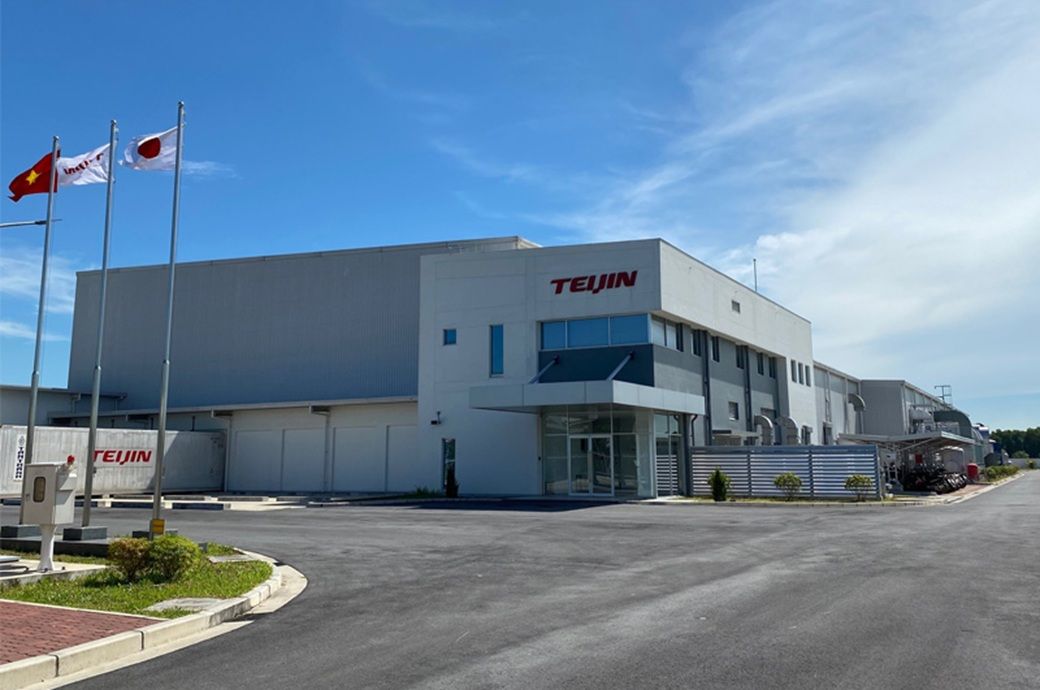
For the first half ended September 30, 2026, revenue declined 2.5 per cent year on year (YoY) to ¥439.6 billion (~$2.79 billion, as per conversion rate of $1 = ¥157.8355 as on November 6, 2026), primarily reflecting the transfer of its North American composites business. Adjusted operating income more than doubled to ¥30.8 billion (~$195.14 million) from ¥13 billion (~$82.36 million), while profit attributable to owners of the parent reached ¥52.5 billion (~$332.62 million), compared with a loss of ¥54.8 billion (~$347.20 million) a year earlier. The profit included a gain related to the completed transfer of the aramid paper business, Teijin said in its results presentation.
First-half margins strengthen across core businesses
First-half earnings before interest, tax, depreciation and amortisation (EBITDA) increased 25.9 per cent to ¥55.9 billion (~$354.17 million), while depreciation and amortisation fell 20.1 per cent to ¥25.1 billion (~$159.03 million). Adjusted operating margin improved to 7 per cent from 2.9 per cent, and return on invested capital rose to 6.4 per cent from 2.6 per cent.
Japan’s Teijin raised its FY26 revenue forecast to ¥920 billion (~$5.83 billion) and adjusted operating income outlook to ¥40 billion (~$253.43 million).
H1 revenue fell 2.5 per cent to ~$2.79 billion, while adjusted operating income more than doubled to ~$195.14 million.
Net profit reached ~$332.62 million, aided by business restructuring and gains from the aramid paper business transfer.
Apparel & Industries revenue rose 8.7 per cent to ¥185.2 billion (~$1.17 billion), with adjusted operating income increasing 7.8 per cent to ¥9.7 billion (~$61.46 million), supported by industrial textiles, artificial leather, filter materials, household merchandise and textile and apparel sales in North America and China. Electronics & Energy revenue climbed 18.9 per cent to ¥89.9 billion (~$569.58 million), while its adjusted operating income surged 70.7 per cent to ¥16.8 billion (~$106.44 million), aided by firm sales of polycarbonate resin, battery materials and membranes.
Specialty Materials revenue fell 26.4 per cent to ¥92.1 billion (~$583.52 million), due largely to the North American composites transfer, but the segment returned to an adjusted operating profit of ¥5.8 billion (~$36.75 million), against a ¥6.2 billion (~$39.28 million) loss a year earlier. Healthcare & Life Solutions revenue declined 6.6 per cent to ¥63.8 billion (~$404.22 million), while adjusted operating income was broadly unchanged at ¥7.1 billion (~$44.98 million), as growth in rented continuous positive airway pressure devices and orphan drugs offset the narrowing of the pharmaceutical business.
Second-quarter profit improves sharply
In the second quarter ended September 30, revenue increased 4.7 per cent YoY to ¥217.6 billion (~$1.38 billion). Adjusted operating income rose to ¥18.5 billion (~$117.21 million) from ¥5.2 billion (~$32.95 million), while profit attributable to owners of the parent was ¥7.4 billion (~$46.88 million), compared with a ¥54.1 billion (~$342.76 million) loss in the prior-year quarter.
Quarterly gross profit increased to ¥61.9 billion (~$392.18 million) from ¥8.6 billion (~$54.49 million), lifting gross margin to 28.4 per cent from 4.1 per cent. Operating income was ¥10.8 billion (~$68.43 million), against an operating loss of ¥56.4 billion (~$357.33 million) a year earlier.
Balance sheet and cash flow improve
At September 30, total assets stood at ¥929 billion (~$5.89 billion), up from ¥920.1 billion (~$5.83 billion) at the end of FY2025. Interest-bearing debt decreased by ¥45.4 billion (~$287.64 million) to ¥291 billion (~$1.84 billion), while the debt-to-equity ratio improved to 0.69 from 0.92, supported by proceeds from the aramid paper business transfer.
Cash flow from operating activities was ¥37.4 billion (~$236.96 million) in the first half, while investing activities generated ¥27.8 billion (~$176.13 million), compared with an outflow of ¥31.2 billion (~$197.67 million) a year earlier. Free cash flow consequently rose to ¥65.1 billion (~$412.45 million). Capital expenditure totalled ¥21.9 billion (~$138.75 million), and research and development expenses were ¥13.3 billion (~$84.26 million).
Teijin upgrades FY26 outlook
Teijin raised its FY26 revenue outlook by ¥20 billion (~$126.71 million) to ¥920 billion (~$5.83 billion), representing an increase of ¥46.8 billion (~$296.51 million) from FY2025. It lifted its adjusted operating income forecast by ¥10 billion (~$63.36 million) to ¥40 billion (~$253.43 million), up ¥14.2 billion (~$89.97 million) year on year, and increased its profit attributable to owners of the parent forecast by ¥5 billion (~$31.68 million) to ¥50 billion (~$316.79 million).
The company expects Electronics & Energy to deliver revenue of ¥170 billion (~$1.08 billion) and adjusted operating income of ¥22 billion (~$139.39 million), while Apparel & Industries is forecast to generate revenue of ¥420 billion (~$2.66 billion) and adjusted operating income of ¥20 billion (~$126.71 million). Specialty Materials is projected to return to an adjusted operating profit of ¥4 billion (~$25.34 million), supported by cost reforms, improved aramid capacity utilisation and aircraft-related carbon fibre demand. Teijin expects the October integration of Teijin Frontier and Asahi Kasei Advance into TA FRONTIER to progressively contribute from the second half.
Fibre2Fashion News Desk (MS)