
Bollywood has increasingly gravitated towards aggressive, larger-than-life protagonists, with several recent action films placing anger, violence and confrontation at the centre of their storytelling. Ranbir Kapoor’s Animal (2023) became one of the most talked-about examples of this trend, collecting more than Rs. 900 crores worldwide. However, his latest blockbuster, Ramayana – Part I, presents a fascinating contradiction. The Nitesh Tiwari-directed epic has generated close to Rs. 1500 crores globally, despite featuring Ranbir in a role associated with restraint, dignity and righteousness.
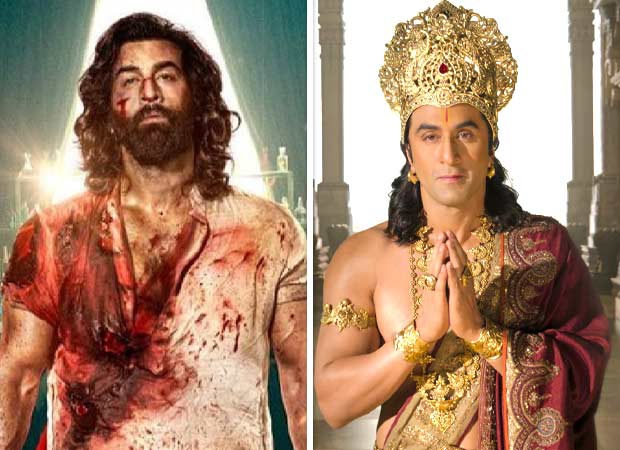
The contrast raises an important question: Do audiences really demand angry, violent heroes, or do they simply want compelling characters and emotionally engaging cinema?
In Animal, Ranbir portrayed a volatile protagonist whose actions and relationships generated considerable debate. The film’s intensity, violence and confrontational storytelling became central to its identity. Ramayana, however, offers a very different screen presence. Ranbir’s portrayal of Lord Ram is rooted in the values traditionally associated with the character, including duty, compassion, self-control and respect. The contrast is striking. Yet both films have achieved enormous commercial success. This suggests that audiences are capable of responding to very different representations of masculinity and heroism, provided the characters are presented convincingly.
One of the recurring assumptions in the Hindi film industry is that a successful formula must be repeated. When aggressive action films become blockbusters, filmmakers may assume that violence and anger are essential ingredients for theatrical success. But Ramayana’s performance challenges that assumption. The film demonstrates the commercial potential of a protagonist whose appeal is not primarily built around intimidation or aggression.
At the same time, it would be simplistic to conclude that audiences have rejected violent cinema. Animal’s success clearly demonstrates otherwise. The more reasonable conclusion is that audiences are not restricted to one kind of hero. For Ranbir, this contrast is particularly beneficial.
Many stars develop a recognisable screen image that becomes central to their popularity. Audiences may repeatedly expect them to deliver a particular personality or type of performance. Ranbir’s recent successes indicate that his audience is willing to accept him in dramatically different roles. The aggressive protagonist of Animal and the composed hero of Ramayana are hardly interchangeable characters. Yet Ranbir has been able to headline major theatrical successes with both. His versatility is therefore not merely an artistic strength. It has also become a commercial advantage.
The film’s performance could also encourage filmmakers to reconsider the kind of protagonists they present. A hero doesn’t always need to be angry, ruthless or emotionally explosive to attract audiences. Characters driven by responsibility, sacrifice and moral conviction can also work in commercially ambitious cinema. However, Ramayana’s massive collections cannot be attributed solely to its protagonist’s temperament. The story’s cultural significance, ensemble cast, filmmaking scale, visual presentation and audience familiarity are also important factors. Similarly, Animal’s success involved much more than its protagonist’s aggression. The real lesson lies in the importance of execution rather than the imitation of a particular formula.
The extraordinary success of these two films has established Ranbir Kapoor as an actor capable of moving between dramatically different screen identities. Animal demonstrated that he could lead an intense, confrontational drama with massive commercial appeal. Ramayana has demonstrated that a dignified, restrained protagonist can also exist at the centre of a spectacular worldwide blockbuster. Perhaps Bollywood’s biggest takeaway should be this: Audiences don’t necessarily want their heroes to be violent or virtuous. They want characters they can connect with, stories worth experiencing on the big screen and films that justify the price of admission. Ranbir Kapoor’s Animal and Ramayana have proved that there is room for both kinds of heroes.