
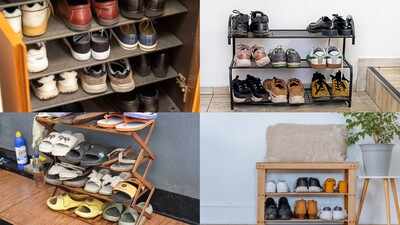
Walk into most Indian homes, and the first thing you’ll spot right at the entrance isn’t a welcoming hallway or a nice piece of furniture; it’s a shoe rack, usually stuffed way past capacity, with a few stray pairs scattered on the floor around it because there simply wasn’t room left inside. It’s practical, sure, but it’s also often the least attractive thing in the entire house, and it’s the very first impression anyone gets the moment they walk through your door. Swapping that bulky, overflowing shoe stand for a sleek entryway table is one of those changes that sounds small on paper but genuinely transforms how your home feels the second someone steps in.
Why the traditional shoe rack stops working over time
Most shoe racks are designed with a fixed number of shelves and a fixed height, which works fine when you first buy it, but as families grow, shoe collections grow, before long that same rack is bursting at the seams. What starts as a tidy, organised unit slowly turns into a cluttered mess, with shoes piled on top, spilling onto the floor, and generally becoming the one spot in the house nobody wants guests to actually look at. The bulkiness of most shoe racks also eats up a surprising amount of floor space, something that matters a lot more in smaller apartments and flats where every square foot of the entryway genuinely counts.
What an entryway table actually offers instead
An entryway table flips the whole approach, prioritising a clean, functional surface over sheer shoe storage. Instead of open shelves stacked with footwear on full display, a table gives you a flat top for keys, a small tray, maybe a vase or a decorative bowl, and closed storage underneath or within drawers where shoes and clutter can be tucked away out of sight. It immediately reads as more intentional, more styled, the kind of entrance that feels like it was actually designed rather than one that just happened because a shoe rack needed to go somewhere.
Where do the shoes actually go, though
This is usually the first practical question people have, and the honest answer is that a proper entryway table setup accounts for this rather than ignoring it. Many entryway tables come with a closed cabinet base or drawers specifically meant for shoe storage, keeping pairs hidden but still easily accessible. For households with a larger shoe collection, pairing the table with a slim, closed shoe cabinet tucked along an adjacent wall, rather than leaving it open, keeps the overall look clean while still giving everyone enough space for their footwear.
The visual difference is bigger than you’d expect
There’s something about swapping an open, cluttered shelving unit for a single clean surface that instantly makes a space feel calmer and more put together, even if the actual square footage hasn’t changed at all. A table with a nice finish, whether that’s wood, marble-top, or even a simple painted surface, immediately elevates the entryway in a way a plastic or laminate shoe rack simply can’t. It’s often the difference between an entrance that feels like an afterthought and one that actually sets the tone for the rest of the home.
Choosing the right table for your space
The right entryway table really depends on how much space you’re working with and how your household actually uses the space day to day. In a narrow hallway, a slim console table, something shallow enough not to block movement but long enough to hold a few essentials, tends to work best. For slightly larger entryways, a table with built-in drawers or a closed cabinet base offers more concealed storage without sacrificing that clean, streamlined look. Choosing a table with a bit of leg clearance underneath can also double as a spot to slide in a small tray or basket for shoes people are actively wearing that week, keeping frequently used pairs accessible without cluttering the surface above.
Styling it so it actually looks good
Once the table’s in place, a little styling goes a long way in making the whole entryway feel finished. A small tray for keys and everyday essentials keeps loose items from scattering across the surface, while a mirror hung just above the table not only looks good but genuinely helps in a small entryway, both for a last-minute outfit check and for visually opening up the space. Adding a small plant, a scented candle, or a simple bowl for coins and odds and ends gives the surface a lived-in, welcoming feel without tipping into clutter, provided you resist the urge to pile too much onto it.
What to do with the old shoe rack
Rather than tossing the old shoe rack out entirely, many households find a second life for it elsewhere in the home, tucked into a utility room, a balcony storage corner, or even repurposed inside a wardrobe for off-season footwear that doesn’t need to be right by the front door. This way, the overflow shoes still have a home, just not one that’s the first thing every visitor sees the moment they walk in.
A small change with a noticeably bigger payoff
What makes this particular makeover so satisfying is how disproportionate the payoff feels compared to the actual effort involved. Swapping out one piece of furniture for another doesn’t require a renovation or a huge budget, yet it changes the entire first impression of your home in a way few other quick fixes manage. For anyone tired of walking past a cluttered, overflowing shoe rack every single day, this is one of those upgrades that’s genuinely worth prioritising sooner rather than later.
Disclaimer:
This article is intended for general informational and home décor purposes only. Actual space requirements and furniture choices may vary based on home layout, household size, and personal storage needs.
