
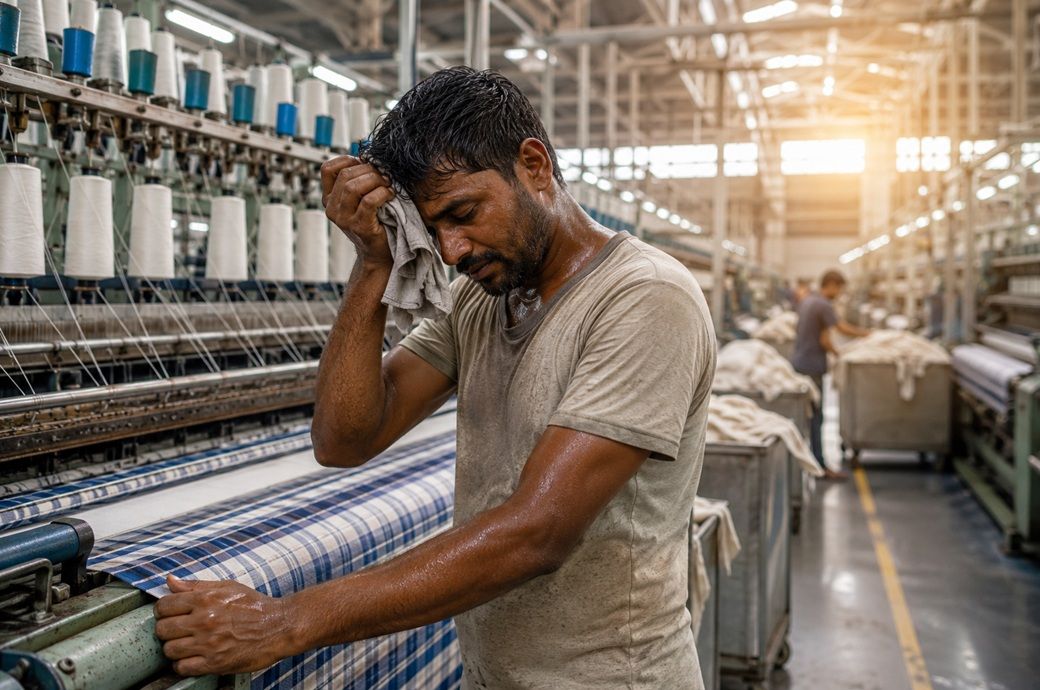
South Asia is preparing to add 280 million working-age people by 2050, while rising temperatures are among the greatest threats to jobs, productivity and long-term economic growth in the region, the report said.
Extreme heat is costing South Asia the equivalent of nearly 31 million full-time jobs a year and could cut the regional economy by nearly 7 per cent by 2050.
Textile and apparel supply chains face weaker productivity, business disruption, and stressed infrastructure in urban hubs.
Next steps include heat-resilient infrastructure, worker protection, sustainable cooling, and early warnings.
The World Bank report, A Livable Future: Protecting Jobs and Growth from Extreme Heat in South Asia’s Cities, finds that by 2070 around 520 million people across South Asia could experience at least one month of dangerous heat each year, four times as many as today. The South Asia region covered in the report includes Bangladesh, Bhutan, India, Maldives, Nepal and Sri Lanka.
Extreme heat is already reducing labour productivity, disrupting businesses and jeopardising the competitiveness of South Asia’s cities, the World Bank said. It is also putting pressure on health systems and critical infrastructure, while affecting low-income households, informal workers, women, the elderly and children the hardest.
The report examined heat through the lens of jobs, productivity and economic growth, including its effects on workers, businesses, infrastructure, public services and urban economies. It argues that heat should not be treated only as a seasonal emergency, but integrated into urban planning, infrastructure investment, public policy and private sector development.
For policymakers, the World Bank sets out a roadmap that can be implemented through existing institutions and financing mechanisms. Its recommendations include investing in heat-resilient infrastructure, strengthening Heat Action Plans, protecting vulnerable workers, expanding sustainable cooling, improving early warning systems and mobilising public and private investment to build more resilient cities.
John Warburton, climate resilience lead for Asia Pacific at UK’s Foreign Commonwealth and Development Office said: “Across South Asia, extreme heat is destroying livelihoods, impacting public health, depressing productivity, and pushing the most vulnerable further into poverty. This is a development crisis that calls for sustained action across sectors. That is why the UK government, through our flagship Climate Action for a Resilient Asia programme, is committed to working with the World Bank and other partners to build knowledge, inform policies, and unlock the investment needs in the region to adapt to a warming planet.”
The report said cities across South Asia are already showing how Heat Action Plans, resilient infrastructure, urban greening, early warning systems and efficient cooling can save lives, protect workers and reduce economic losses. Scaling these approaches will require stronger institutions, better coordination and greater public and private investment.
As South Asia continues to urbanise, the report said government choices will determine whether cities remain engines of jobs, innovation and growth, or become increasingly constrained by rising temperatures. It said investing in heat resilience is essential to protect people, strengthen economies and secure the region’s long-term prosperity.
Fibre2Fashion News Desk
