
Gref said in New Delhi that the work was at an early stage, but that digital currencies could offer a large opportunity for settlements between the two countries. India is hosting the annual BRICS summit in New Delhi, where cross-border payments form part of the financial agenda.
The initiative comes as India and Russia seek to reduce payment frictions in bilateral commerce and deepen economic ties. Russia launched its central bank digital currency, the digital ruble, on September 1 through systemically significant banks, including state-controlled Sberbank, while India began a pilot for its digital currency in 2022 and it is now used in some government programmes, according to media reports.
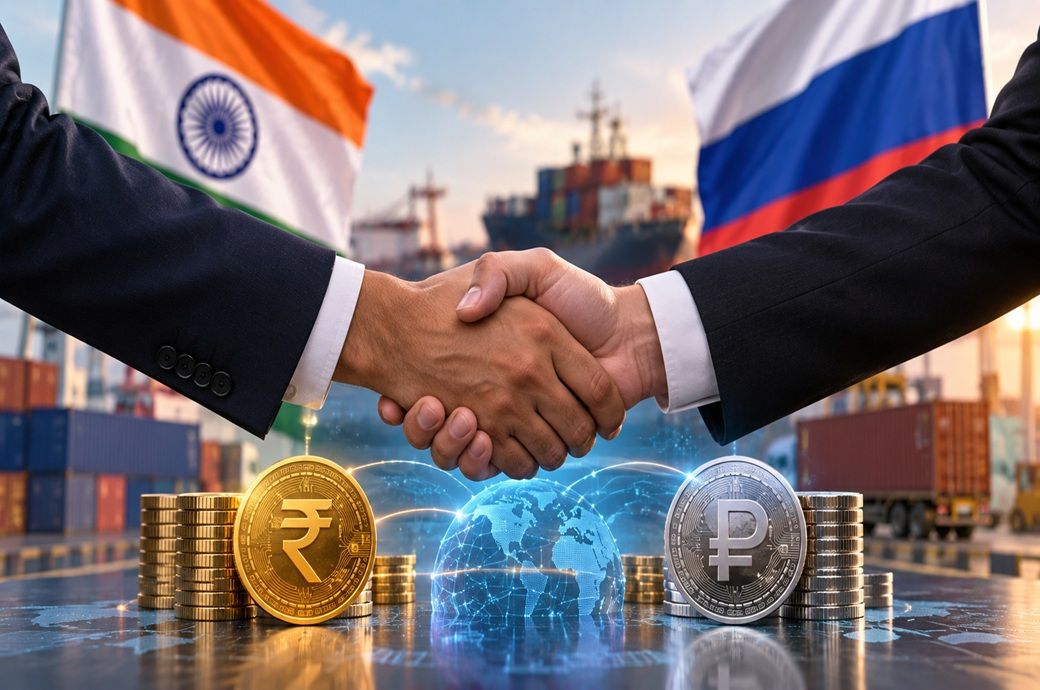
India and Russia are exploring a digital currency mechanism for trade settlements, with their central banks working on the structure.
The move could reduce payment frictions for exporters and importers as bilateral trade targets $100 billion by decade-end.
BRICS finance officials are also studying faster, lower-cost cross-border payment channels and local-currency settlement options.
The Kremlin also said Russia would discuss the use of digital currencies for trade settlements with BRICS members and partner nations at the summit in New Delhi. India has also supported the use of central bank digital currencies for bilateral trade and cross-border payments, according to the report.
BRICS finance ministers and central bank governors said in a joint statement that they had discussed the possibility of efficient cross-border payment mechanisms. The statement acknowledged the work of the BRICS Payment Task Force (BPTF) in exploring practical solutions under the BRICS Cross-Border Payments Initiative, drawing on guidance from leaders in the Kazan and Rio Declarations.
The BPTF has also examined cross-border interoperability of payment and messaging channels and discussed the promotion of trade settlements and investments in the local currencies of BRICS countries. The grouping said the task force should respect national priorities and recognise that there is no single model for cross-border payments, while encouraging further work on practical options that are fast, low-cost, accessible, efficient, transparent and safe.
For India-Russia trade, the payments push also follows a rupee-balances issue that arose after bilateral trade expanded following Russia’s invasion of Ukraine in 2022, when Russian companies accumulated large rupee holdings in vostro accounts with Indian banks. Gref said this was no longer a significant challenge because companies had found ways to use the rupees, with some excess funds invested in federal government securities.
The Reserve Bank of India had allowed rupee balances in vostro accounts to be used for investments in Indian projects or securities, as well as for future purchases of goods and services.
India and Russia have been amongst each other’s top five trading partners since 2022, after India sharply increased purchases of Russian oil. Bilateral trade reached nearly $60 billion in India’s fiscal 2026, with Russian oil accounting for the bulk of India’s imports, and the two countries want trade to reach $100 billion by the end of the decade; however, the trade flow remains heavily tilted towards Russia.
Gref said India needed to increase exports and create more opportunities in the Russian market, and that the trade imbalance of more than $50 billion needed correction. For suppliers assessing Russia-linked business, the imbalance keeps attention on whether new settlement channels can support more two-way trade.
The wider BRICS financial agenda also covers calls to reform the Bretton Woods institutions, including the International Monetary Fund and the World Bank, to give emerging markets and developing economies greater voice and representation, according to the joint statement.
The statement also backed a larger role for the New Development Bank, including expanded local-currency financing, more diversified funding sources and support for high-impact development projects, and reaffirmed BRICS cooperation on taxation, illicit financial flows and fair allocation of taxing rights.
Fibre2Fashion News Desk (CG)
