
Lumio recently refreshed its smart TV lineup in India with the Lumio Vision 9 (2026) and Vision 7 (2026), and the successors to its first-gen TVs have big shoes to fill. The startup’s claim to fame is that its smart TVs boot up faster than rivals’ and allow users to install and launch apps faster. The Lumio Vision 9 (2026), which is now available with a larger 65-inch panel, goes up against smart TVs from brands like Sony, LG, TCL, Xiaomi, and Samsung.
This 65-inch QD-Mini LED smart TV also has features useful for gamers, including support for variable refresh rate (VRR) and auto low latency mode (ALLM), and a 144Hz (4K) refresh rate, with HDMI 2.1 support for gaming consoles.
The company sent us the Lumio Vision 9 (2026) for review, which is priced at Rs. 72,999 in India (the price is typically lower with discounts and offers) and available to purchase via Amazon and Flipkart. It’s in a competitive price segment, so does it offer enough value for money, or should you be looking at rival options? Read our review to find out.
Lumio Vision 9 (2026) Design: Sturdy Build Quality, Accessible Ports
Lumio’s biggest smart TV features a standard design, with thin bezels on the top, left, and right edges, and a slim chin at the bottom with the Lumio logo. The edges and rear panel of the Vision 9 (2026), except for the area housing the speaker cavity, are made of metal and have a smooth finish.
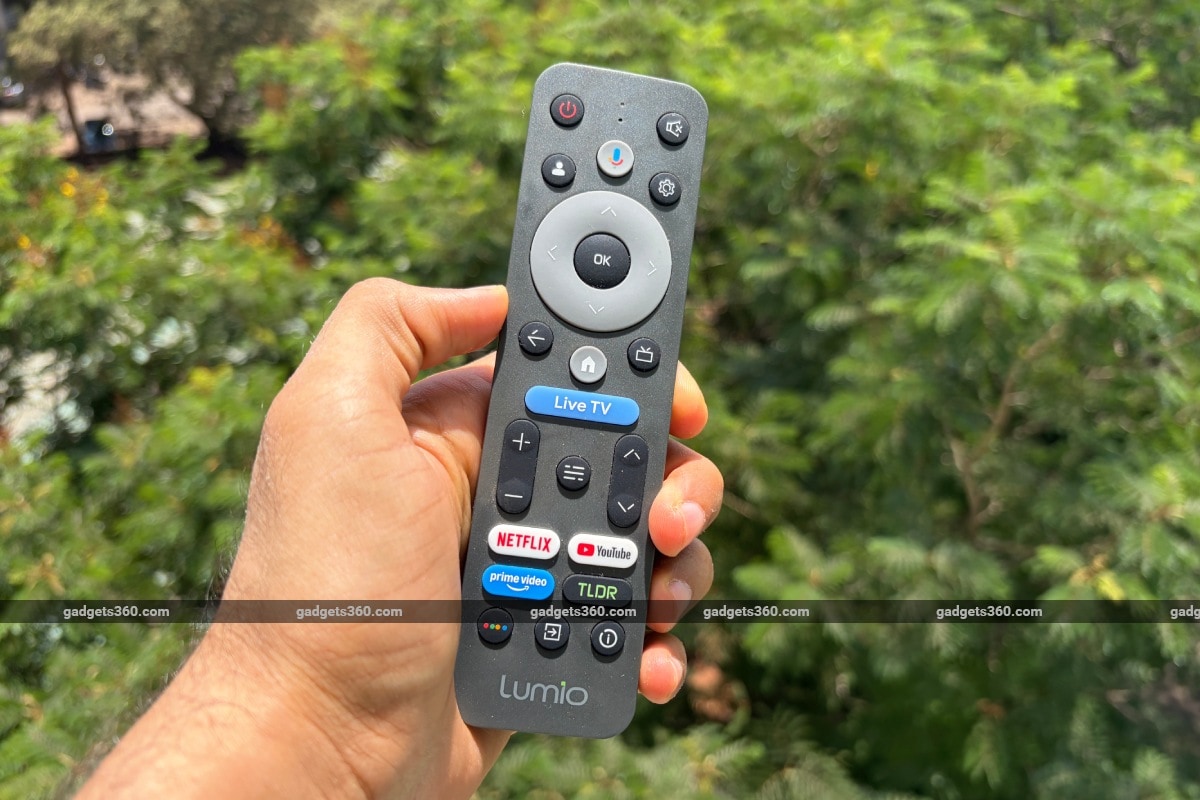
The buttons on the ‘Minion’ remote are very clicky and responsive
It’s a fairly large TV, so you’ll probably want to mount it on your wall. If you’re like me and you prefer it on a large cabinet, the Vision 9 (2026) ships with solid metal legs. It’s good to see the company didn’t cut any corners here, as this is a large TV that weighs approximately 18kg.
Unfortunately, the cabinet that my smart TV sits on faces the biggest window in my house, which means there’s a lot of sunlight, especially after 12 pm (noon). There’s an anti-reflective, almost matte-like coating on the smart TV that reduces reflections from my window and the lights in my house at night.
On the left side of the Lumio Vision 9 (2026), you get two USB 2.0 Type-A ports and a USB 3.1 port. There are three HDMI 2.1 ports, two of which support a 144Hz refresh rate at 4K (with VRR and ALLM), and one of the two also supports eARC for your external soundbar or receiver. The smart TV also has a digital audio output port, a 3.5mm jack, and an Ethernet (RJ45) port.
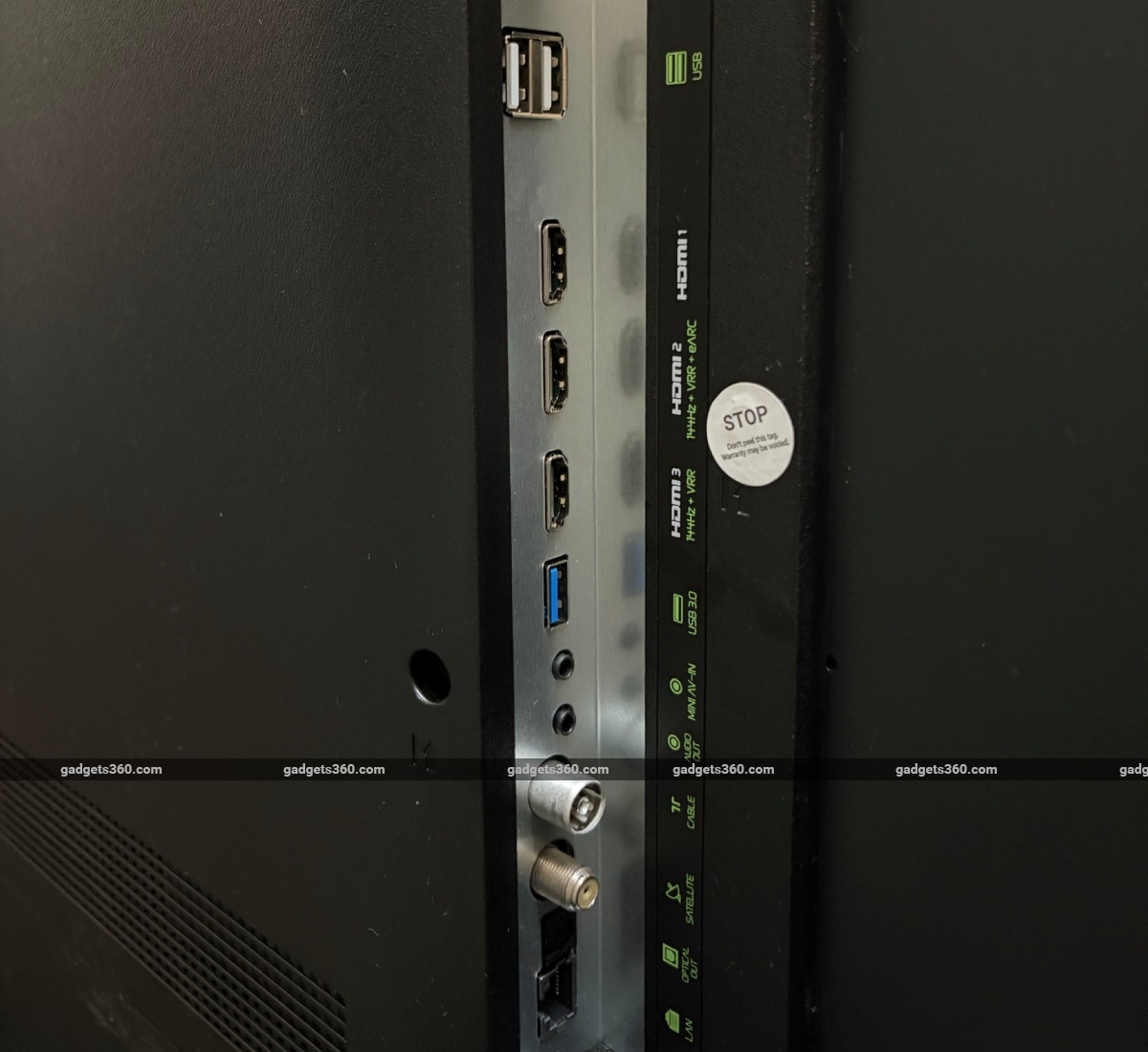
The Lumio Vision 9 (2026) is equipped with a range of connectivity options
You have two options to switch on the TV: press the button under the Lumio logo on the bottom edge of the smart TV, or use the ‘Minion’ remote. The latter is a standard TV remote that features a dedicated TLDR button, which we’ll get to in a bit. The ergonomics are good, and the buttons are nice and clicky, without any noticeable noise.
Lumio Vision 9 (2026) Performance: Exceeds Expectations
This is the most advanced model in Lumio’s lineup so far, and it has a 65-inch QD-Mini LED panel that is claimed to deliver a better contrast ratio and viewing angles than the previous generation and other VA panels. During the time that I tested the smart TV, I found that it delivered sharp visuals without a notable impact on colour and contrast at different viewing angles.
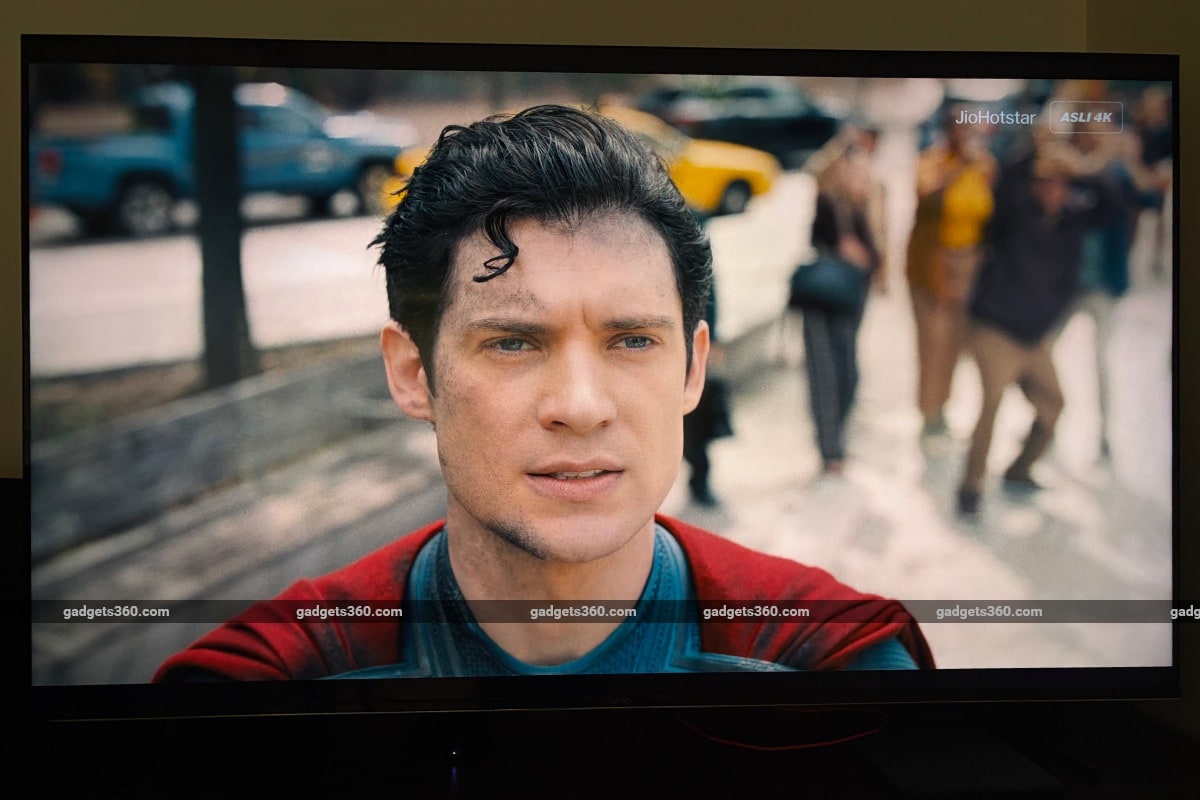
Superman (2025) on the JioHotstar app at 4K resolution
The panel on the Lumio Vision 9 (2026) has a peak HDR brightness of 800 nits and a typical brightness of 450 nits. In day-to-day use, the screen gets quite bright, though you might notice the edges of the panel are slightly brighter when playing certain types of content. The Vision 9 (2026) also supports HDR10 and Dolby Vision, which is great for 4K content.
It covers 82 percent of the Rec.2020 colour gamut, and Lumio also touts its Dope Display 2 picture tuning, which is claimed to deliver accurate colours with HDR10 and HLG. The company also sent me some alternative tuning options that let you set your own values for white balance, saturation, gamma and hue. These can be configured using the remote, but I actually preferred (and eventually reverted to) the default ‘Standard’ preset.
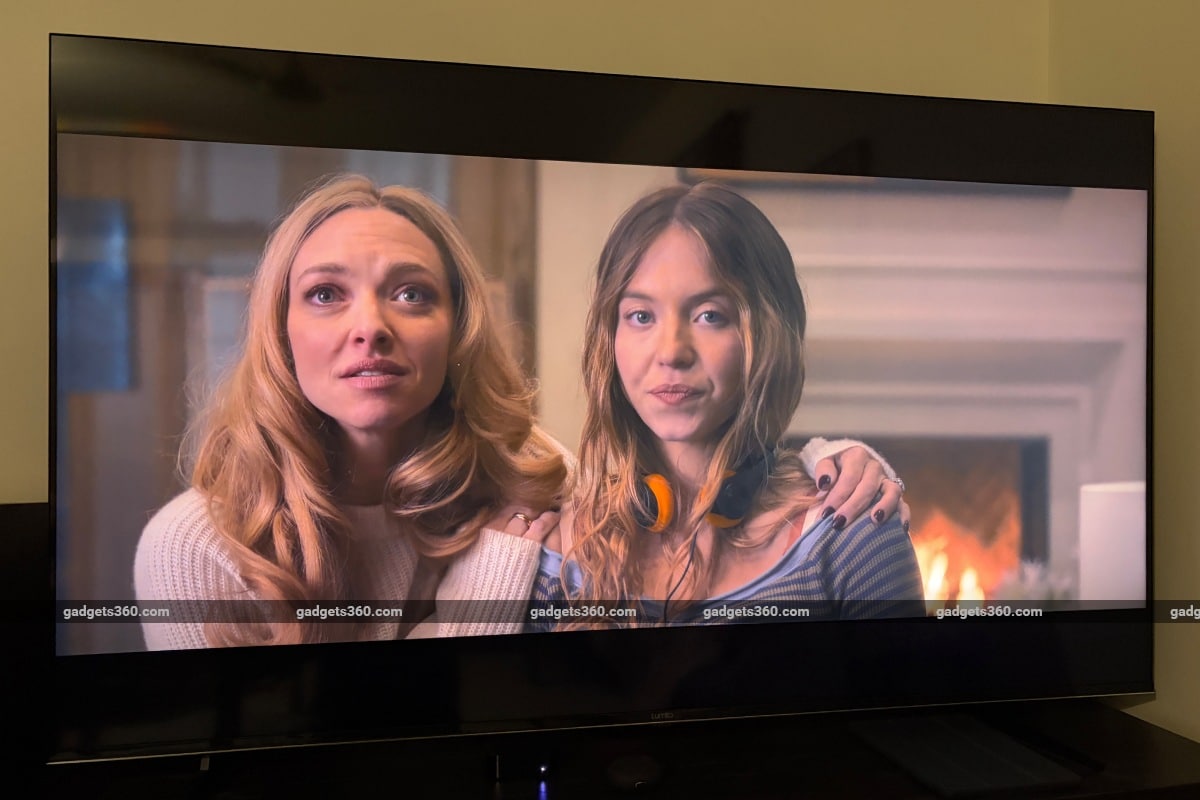
The Housemaid (2025) on Prime Video at 4K resolution, with Dolby Vision
I don’t have a gaming console, so I wasn’t able to test the VRR and ALLM support on the Lumio Vision 9 (2026). When I connected the TV to an Apple TV 4K, it supported HDR10 and Dolby Vision throughout the user interface and while watching supported content.
The six-driver speaker setup on the Lumio Vision (2026) comprises two full-range drivers, two subwoofers, and two tweeters, with a total output power of 50W. The company also touts its in-house DGS 2.2 audio tuning that it says offers improved bass performance with the dual subwoofer setup on the new model.
In day-to-day use, I found that the TV handled content with a lot of bass without noticeable distortion, and it also delivered clear audio when playing recordings of classical music concerts. I also connected a Sony SA:D100 home theatre system to the Lumio Vision 9 (2026), which offered stereo audio output on the four-speaker setup.
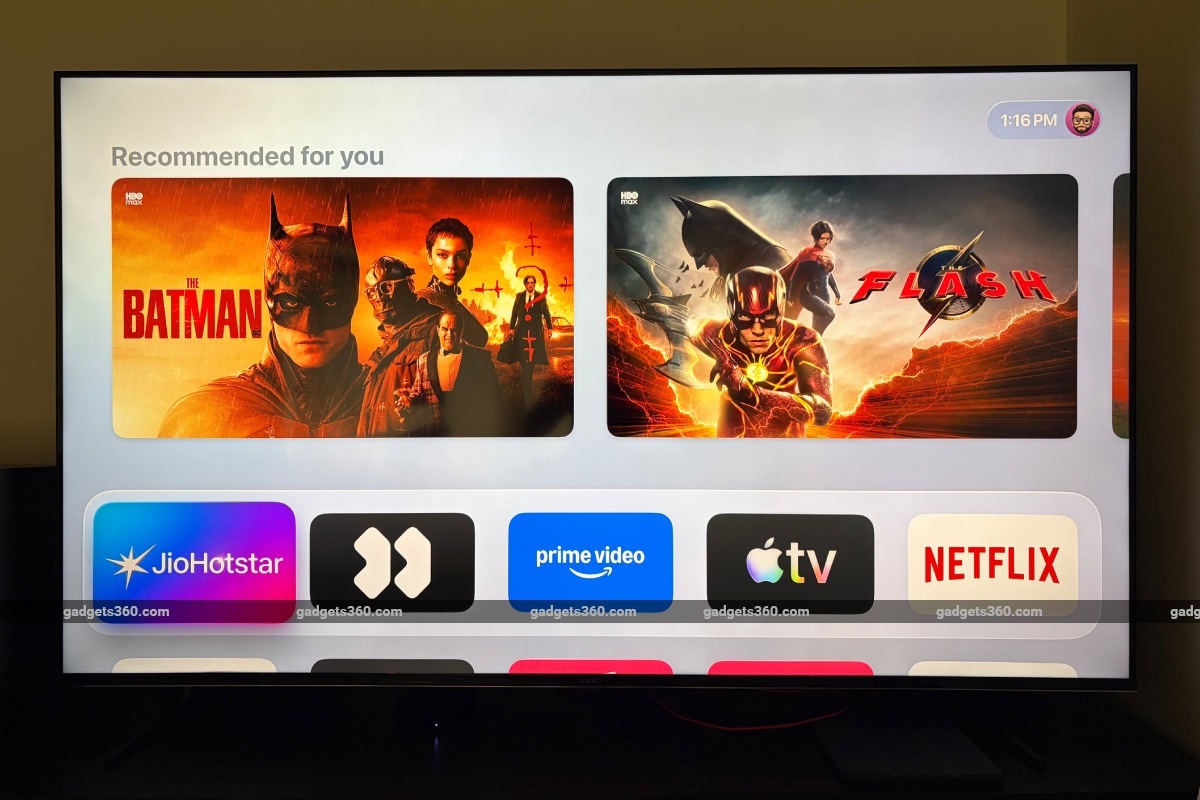
The Lumio Vision 9 (2026) supports Dolby Vision across the tvOS 26 interface on a connected Apple TV
In terms of software, the Lumio Vision 9 (2026) has one of the cleanest Google TV interfaces I have used. It doesn’t ship with any bloatware, and doesn’t have its own app launcher. The Google TV home screen doesn’t have any in-line promotions, and you get the latest version (Android TV 14) out of the box. There’s also no form of automatic content recognition (ACR), and the company confirmed that it has no plans to add it to the smart TV in the future.
Lumio claims that its TVs boot up in a few seconds, and I found that to be the case when I used the Vision 9 (2026). It’s faster than most other smart TVs in this price segment, including a brand new Sony Bravia Mini LED TV that I recently tested at a friend’s house. This is probably due to the MediaTek Pentonic 700 chip in Lumio’s TV, paired with 3GB of RAM.
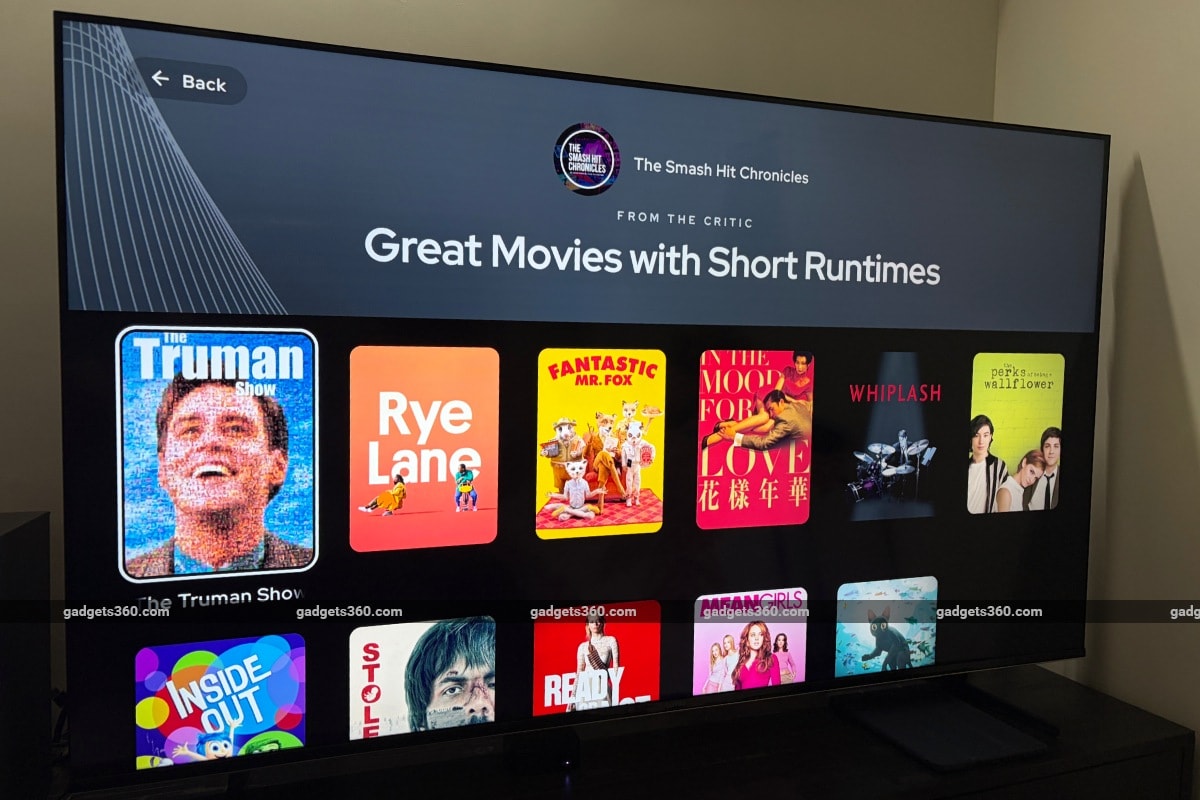
The TLDR app offers content recommendations and real-time sports updates
That dedicated TLDR button that I previously mentioned? It opens Lumio’s in-house content discovery app. The Home tab shows you a curated collection of content available across various OTT platforms, and you can also browse sections for movies, series, music, and even sports. It also displays live scores for sports events and matches, and the company told me that it will also let you track scores during the upcoming FIFA World Cup.
I’ve used third-party content discovery apps to check out new OTT content, but I have to admit that having the TLDR app built in is quite convenient. It’s frequently updated with new details of shows and movies, and match information is updated regularly. While I couldn’t test it, Lumio also says it’s working on a feature that lets you chat with a bot on Telegram or WhatsApp to identify new content, which then shows up directly in the TLDR app.
Lumio Vision 9 (2026) Verdict
There are several options to pick from in the Rs. 65,000 to Rs. 75,000 price segment in India, but the Lumio Vision 9 (2026) offers slightly more value for money in a couple of key areas. The most notable advantage is the headroom for performance, suggesting it is less likely to slow down or get sluggish compared with other smart TVs in the same segment.
It’s also good to see that the Vision 9 (2026) features a sturdy build and has a metal stand, which should honestly be the norm (but isn’t) for large smart TVs in this price segment. The QD-Mini LED panel can handle almost everything you throw at it, including colour-accurate HDR10 and Dolby Vision content.
At Rs. 72,999 (without discounts and promotional offers), the Lumio Vision 9 (2026) is slightly more expensive than similarly specced rivals from TCL, Xiaomi, and Hisense. However, it also offers better performance than the competition, and the company has shown it is quick to provide software updates, making it a worthy choice if you want to keep your smart TV for longer.
