

This Rice Dosa is an easy recipe made with rice flour, urad dal flour and water. Unlike traditional dosa, there is no soaking or grinding required, making it a convenient option for busy days. The batter is simply mixed and fermented overnight before making crisp and golden crepes. This recipe is naturally gluten-free and pairs well with coconut chutney, sambar or potato masala.
About Rice Dosa Recipe
This Rice Dosa recipe is a simple no-grind version made with rice flour, urad dal flour, salt and water. The batter is mixed, fermented overnight and then spread on a hot tawa or skillet to make crisp and golden crepes.
Unlike the traditional Dosa Batter, there is no soaking of rice and lentils or grinding involved. This makes it a convenient recipe when you want a homemade South Indian breakfast without the extra preparation work.
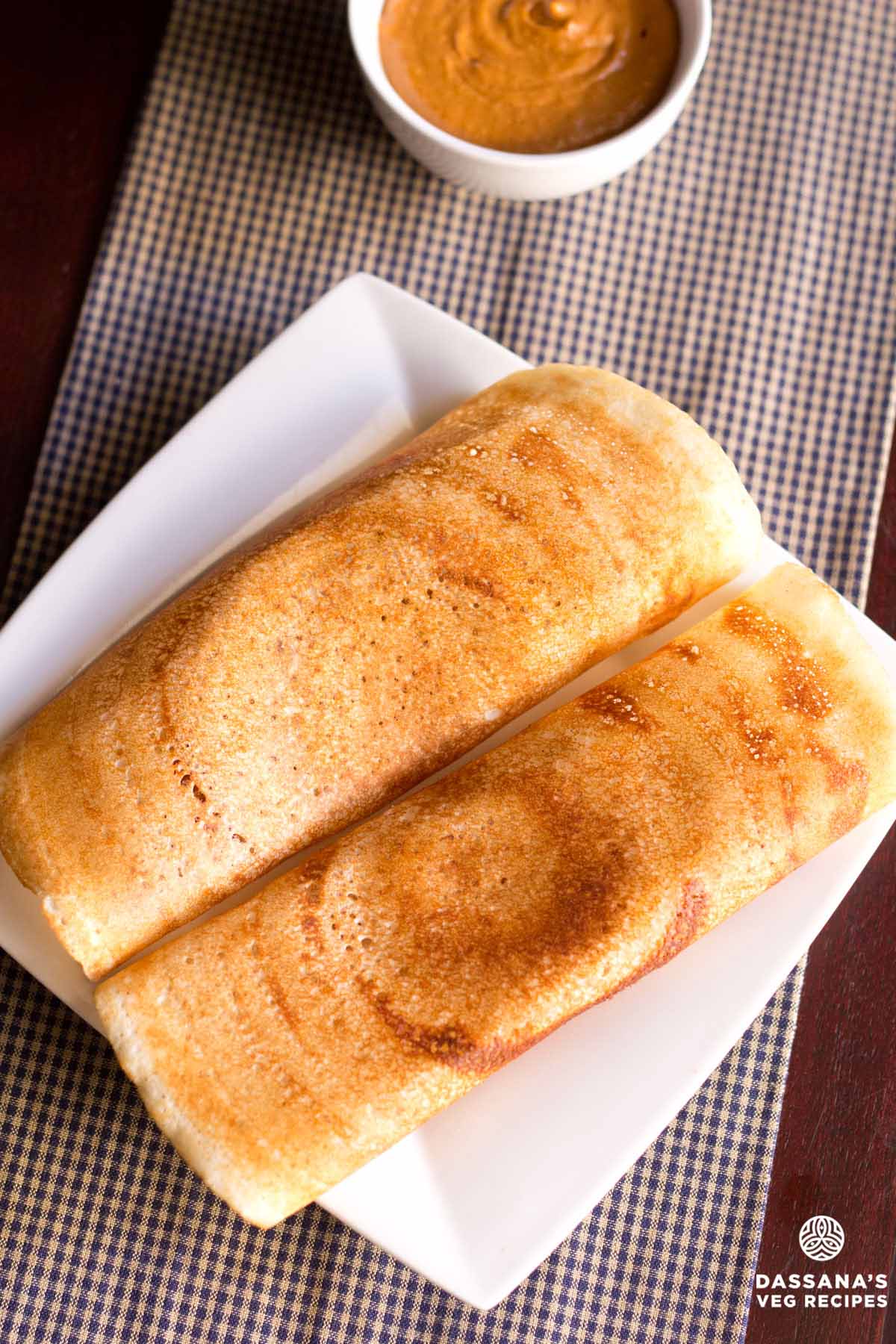
The flavor is different from the classic version that is made with soaked and ground rice and lentils. Since the batter is prepared with flours, it does not develop the same deep fermented taste and aroma. Even so, the rice dosa turns out crisp, light and delicious.
These can be served plain with Coconut Chutney and Sambar, or used to make Masala Dosa by filling them with a spiced Potato Masala stuffing.
More Easy Dosa Varieties
How to Make Rice Dosa (Stepwise)
Make Batter
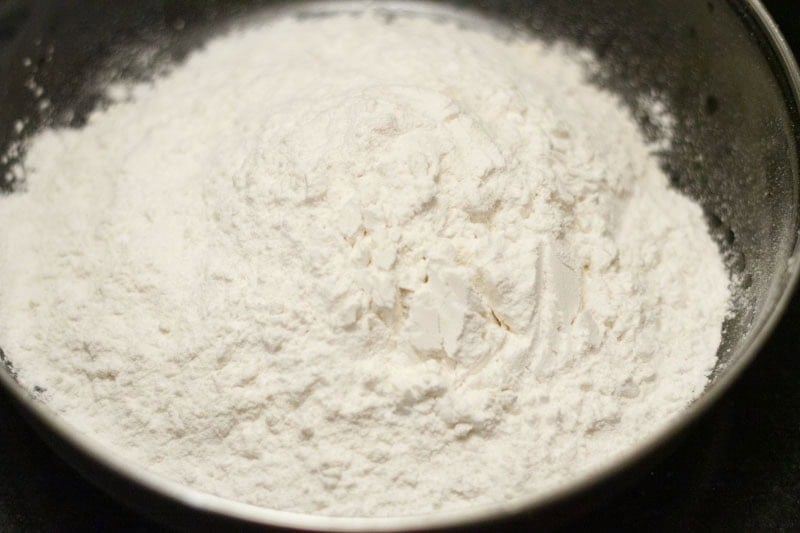
1. Add 1¼ to 1½ cups rice flour to a mixing bowl.
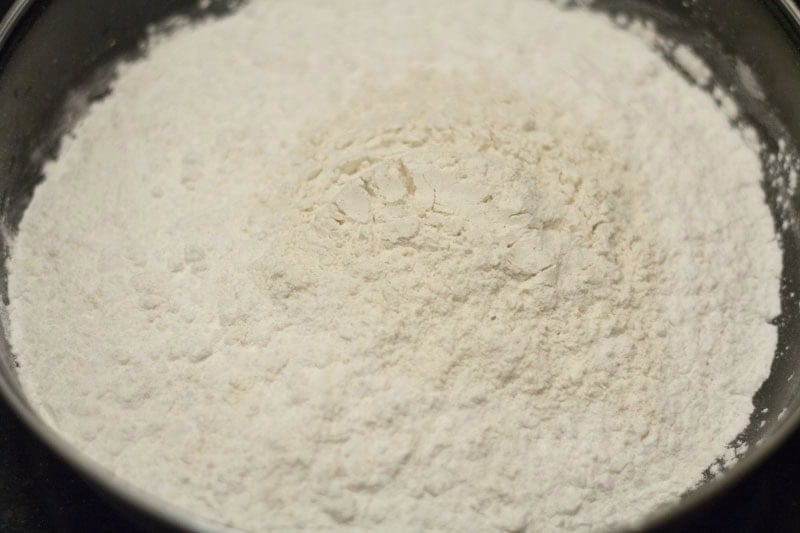
2. Next add ¾ cup of urad dal flour.
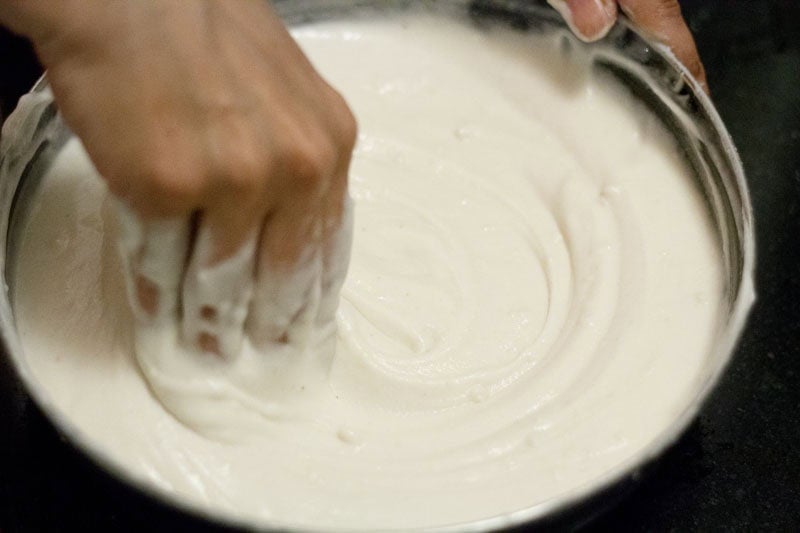
3. Pour in 2½ cups water or as required. Mix very well with a spoon or wired whisk.
You can use your hands to break any lumps and ensure the batter is smooth and evenly mixed.
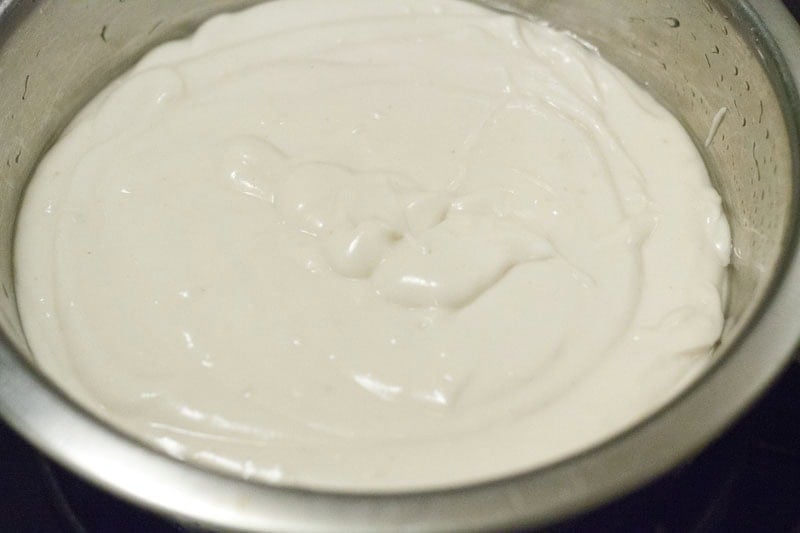
The batter should have a medium-thick, flowing consistency.
4. Transfer the batter to another bowl if needed. Cover and keep it at room temperature to ferment overnight for about 9 to 10 hours.
Ferment Batter
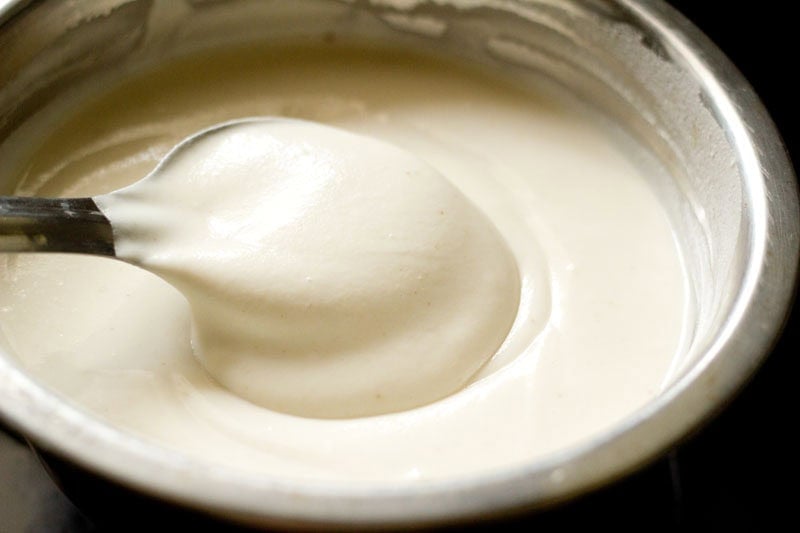
5. After fermentation, the batter will not double or triple in volume like traditional dosa batter. Instead, you will notice a light fermented aroma and a slightly airy texture.
In cooler weather, the batter may require an additional 1 to 2 hours of fermentation.
Tip: For better fermentation, especially during cooler weather, add 1 tablespoon yogurt while mixing the batter.
Make Rice Dosa
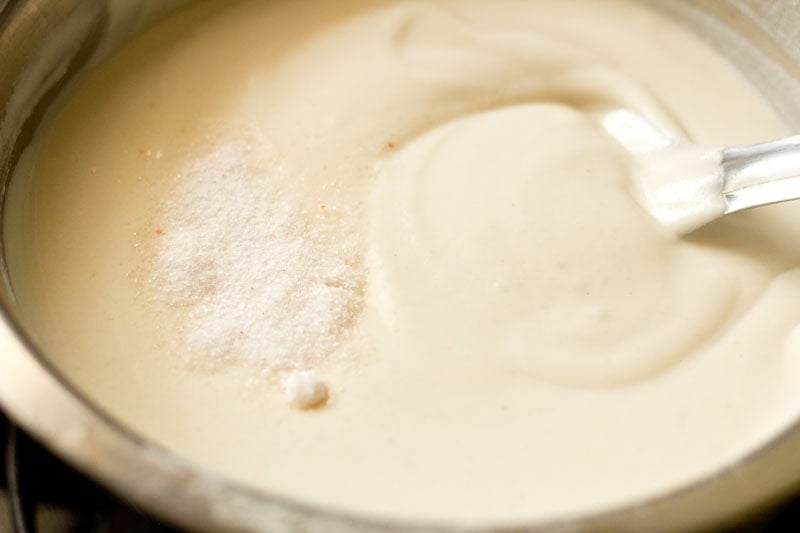
6. Once the batter has fermented, add ½ teaspoon salt and mix well.
7. Heat a cast iron tawa or griddle. Lightly brush or grease it with oil. Pour a ladleful of batter onto the hot tawa.
Tip: If using a non-stick pan, avoid greasing the surface before spreading the batter.
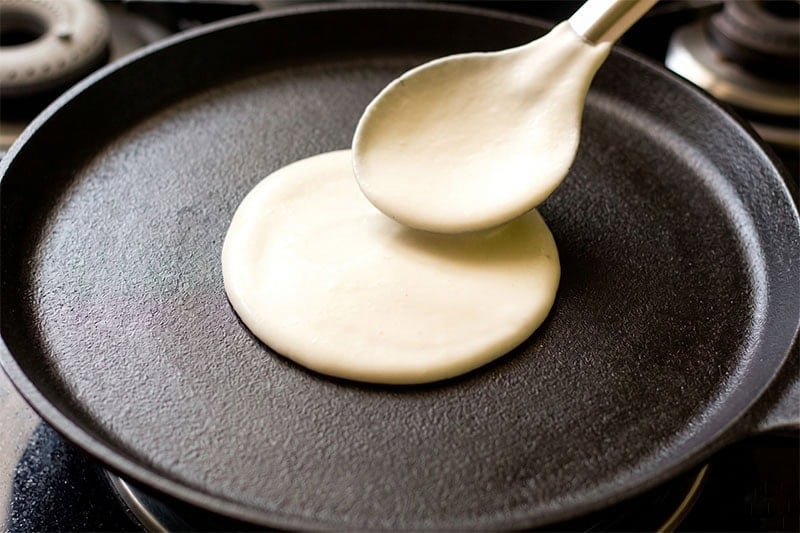
8. Gently spread it in circular motions to form a thin dosa. Let it cook.
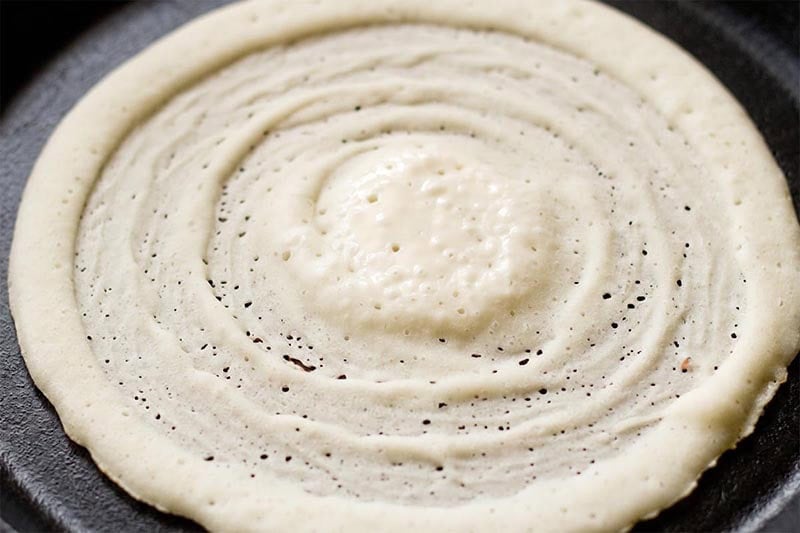
9. Drizzle a little oil around the edges and on top when it looks firm and cooked. Spread the oil on the top with a spoon.
Continue to cook until the base becomes crispy and golden.
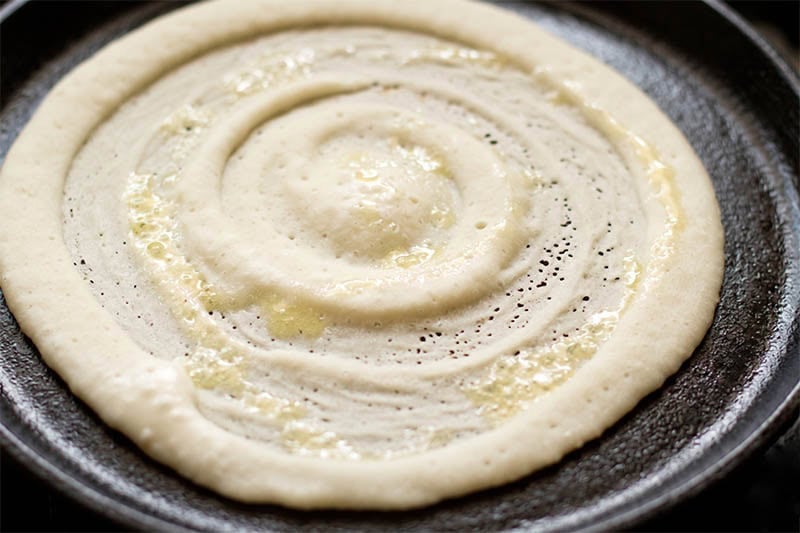
10. Flip and cook the second side.
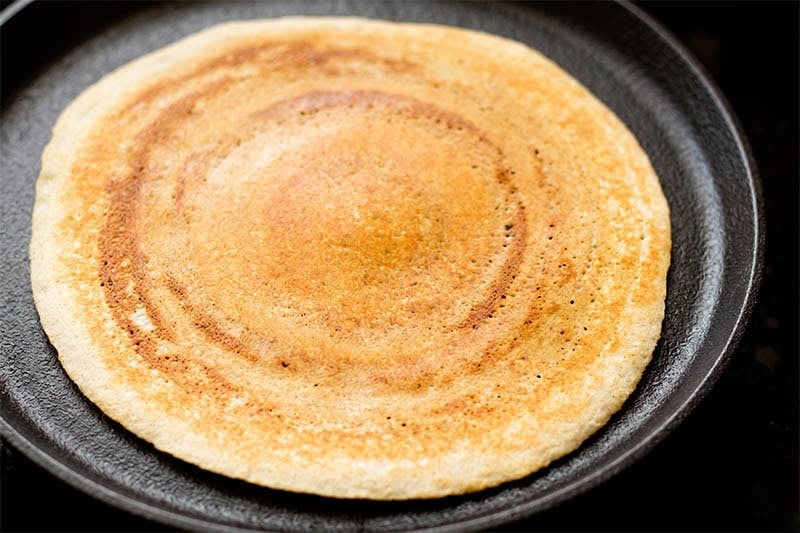
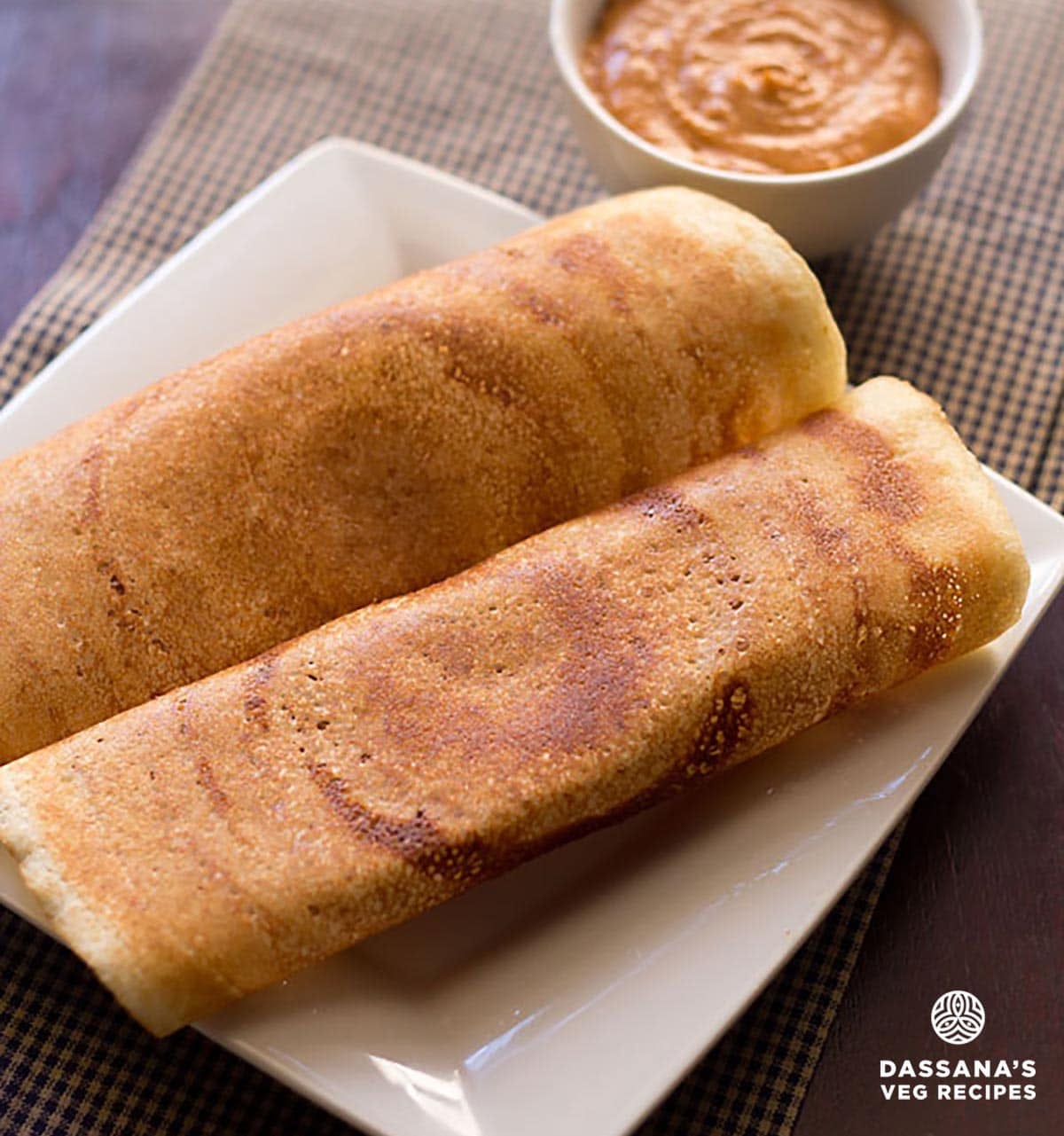
11. Fold the rice dosa and serve hot. Continue making the remaining dosas in the same way.
Serve with coconut chutney, vegetable sambar or potato masala. You can also pair with Tomato Chutney, Peanut Chutney, Idli Chutney or Onion Chutney.
Helpful Tips
- The amount of water needed can vary depending on the texture, freshness and quality of the rice flour and urad dal flour. Add a little more water if the batter looks too thick.
- Use fresh rice flour and urad dal flour for the best results. Fresh flours ferment more easily and give better flavor and texture.
- Avoid using old or aged urad dal flour as it may not ferment well and can affect the taste and texture.
- The rice dosa batter will not rise, double or triple in volume like the traditional batter made with soaked and ground rice and lentils. Look for a faint sour aroma as a sign of fermentation.
- In cooler weather, fermentation may take longer. Keep the batter in a warm place and allow a few extra hours if needed.
- For a better fermentation, add 1 tablespoon yogurt while mixing the batter.
- A well-seasoned cast iron tawa or skillet gives the crispiest texture. If using a non-stick pan, avoid greasing it before spreading the batter.
Add both the rice flour and urad dal flour into a mixing bowl.
Pour water and mix well. The batter has to be smooth and without any lumps and evenly mixed. The consistency should be that of a medium-thick batter but still flowing.
Pour the batter from the mixing bowl in another bowl if needed. Cover and allow to ferment at room temperature overnight for 9 to 10 hours or more if required.
Once the batter is fermented well, then add salt to the batter and mix well.
Heat an iron tawa or skillet. Brush or spread oil lightly on the tawa.
- Take a spoon or ladle with the batter and gently start spreading the batter in circular rounds. If using nonstick pan, then avoid spreading oil on the pan. Since you won’t be able to spread the batter properly on the nonstick pan.
Drizzle oil on the top and sides and let one side cook.
When one side is browned, flip and cook the other side.
Fold the dosa and serve hot with coconut chutney or sambar.
Make remaining dosas in the same way with the batter.
The leftover batter can be refrigerated and used within 4 to 5 days.
- Use fresh rice flour and urad dal flour for the best fermentation and flavor. Avoid using old or aged urad dal flour as it may not ferment well.
- The amount of water needed can vary depending on the quality and texture of the flours. Add a little more water if the batter looks too thick.
- The batter will not double or triple in volume like traditional dosa batter. A light sour aroma is a better indicator that the batter has fermented.
- In cooler weather, the batter may need a few extra hours to ferment. Keep it in a warm place.
- For crisp texture, use a well-seasoned cast iron tawa and cook on medium to medium-high heat.
Calories: 174kcal | Carbohydrates: 21g | Protein: 7g | Fat: 7g | Saturated Fat: 1g | Polyunsaturated Fat: 0.3g | Monounsaturated Fat: 6g | Sodium: 300mg | Potassium: 8mg | Fiber: 5g | Sugar: 0.01g | Vitamin A: 1IU | Vitamin B1 (Thiamine): 0.01mg | Vitamin B2 (Riboflavin): 0.003mg | Vitamin B3 (Niacin): 0.3mg | Vitamin B6: 0.04mg | Vitamin C: 1mg | Vitamin E: 3mg | Vitamin K: 0.4µg | Calcium: 21mg | Vitamin B9 (Folate): 0.4µg | Iron: 2mg | Magnesium: 5mg | Phosphorus: 10mg | Zinc: 0.1mg
